
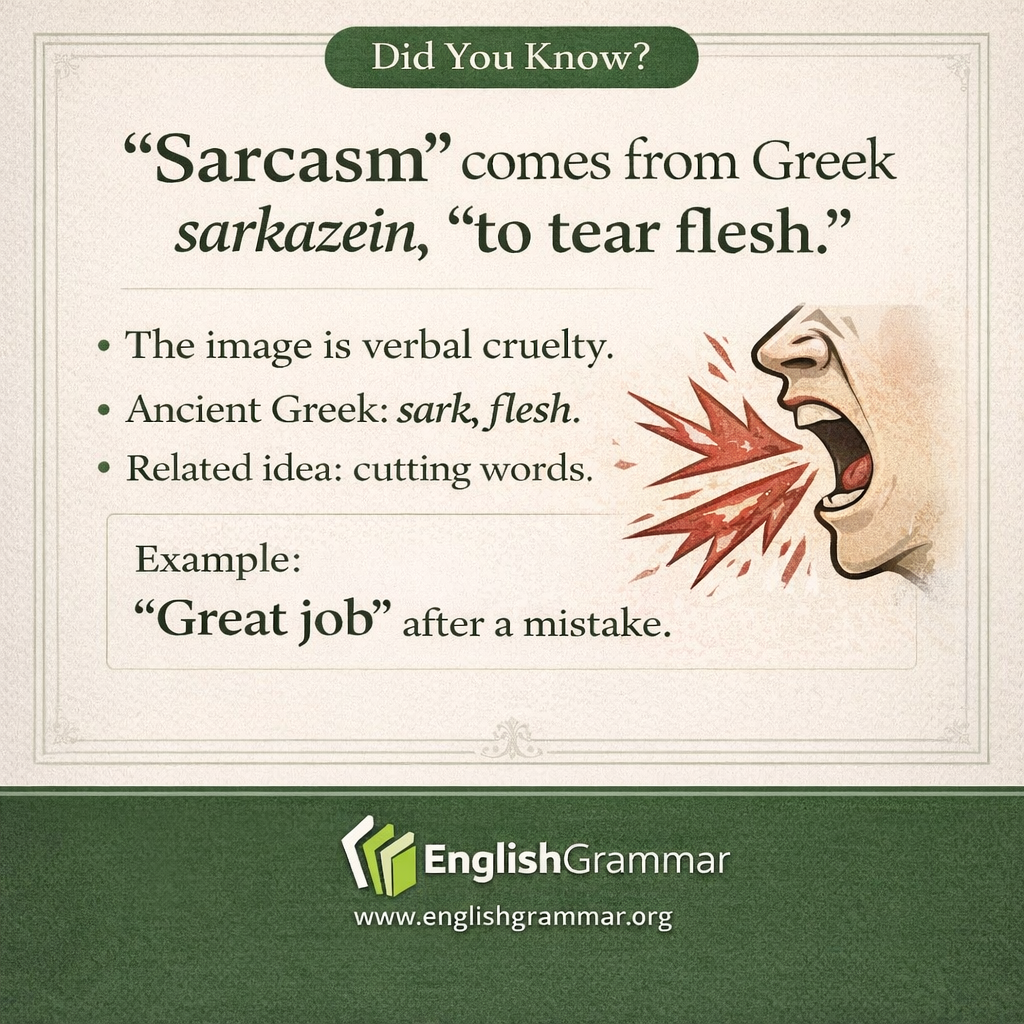
The word sarcasm comes from the Greek verb sarkazein, which meant to tear flesh or to strip meat. That vivid image was later applied to speech that bites, mocks, or wounds.
In other words, the idea behind the word is not gentle irony. It is verbal attack. That is why English still connects sarcasm with the language of injury, such as cutting remarks or words that sting.
A simple example is saying, “Great job” to someone who has just made an obvious mistake. The literal words sound positive, but the real intention is ridicule.
- Literal meaning: to tear flesh
- Figurative meaning: to use sharp, mocking speech
- Modern clue: we still describe sarcasm as cutting
So the history of the word matches the feeling of the tone. Sarcasm is not just saying the opposite of what you mean. It often carries the sense of speech meant to wound.
