
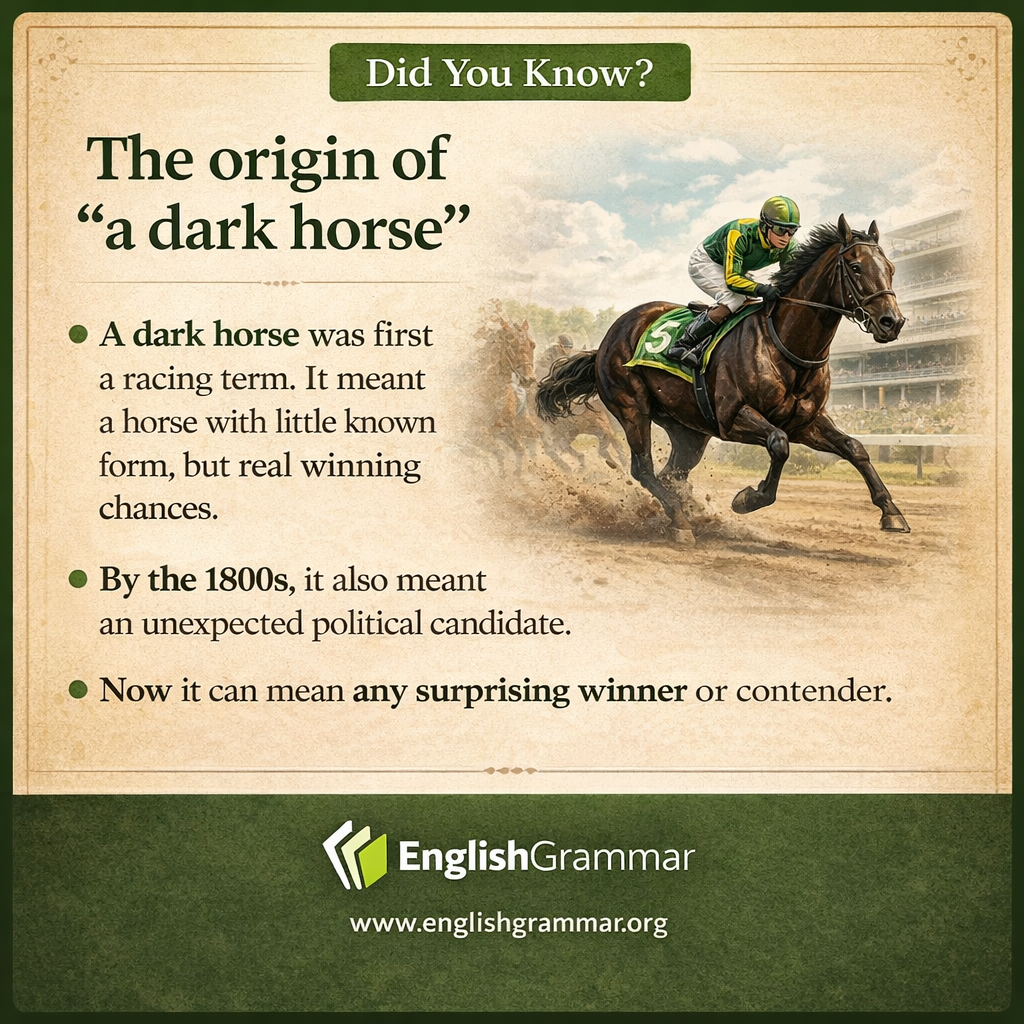
The phrase “a dark horse” began in horse racing. It referred to a horse that was little known to the public but might still win. In other words, the horse’s abilities were not clear to most people, so its success would come as a surprise.
The image is based on the idea of something being hard to see clearly. If a horse’s past performance was not widely known, people could not judge its chances well. That made it a strong phrase for an unexpected contender.
By the 1800s, the phrase had spread beyond racing. It became common in politics for a candidate who was not seen as a leading choice at first, but who suddenly rose to prominence. Today, it can describe almost anyone who surprises others by doing well.
- In racing: “That horse was a dark horse in the field.”
- In politics: “She became the dark horse candidate.”
- In everyday use: “Their team is the dark horse to win the tournament.”
So when someone calls a person or team a dark horse, they usually mean an overlooked competitor with a real chance of success, not just a random outsider.
