
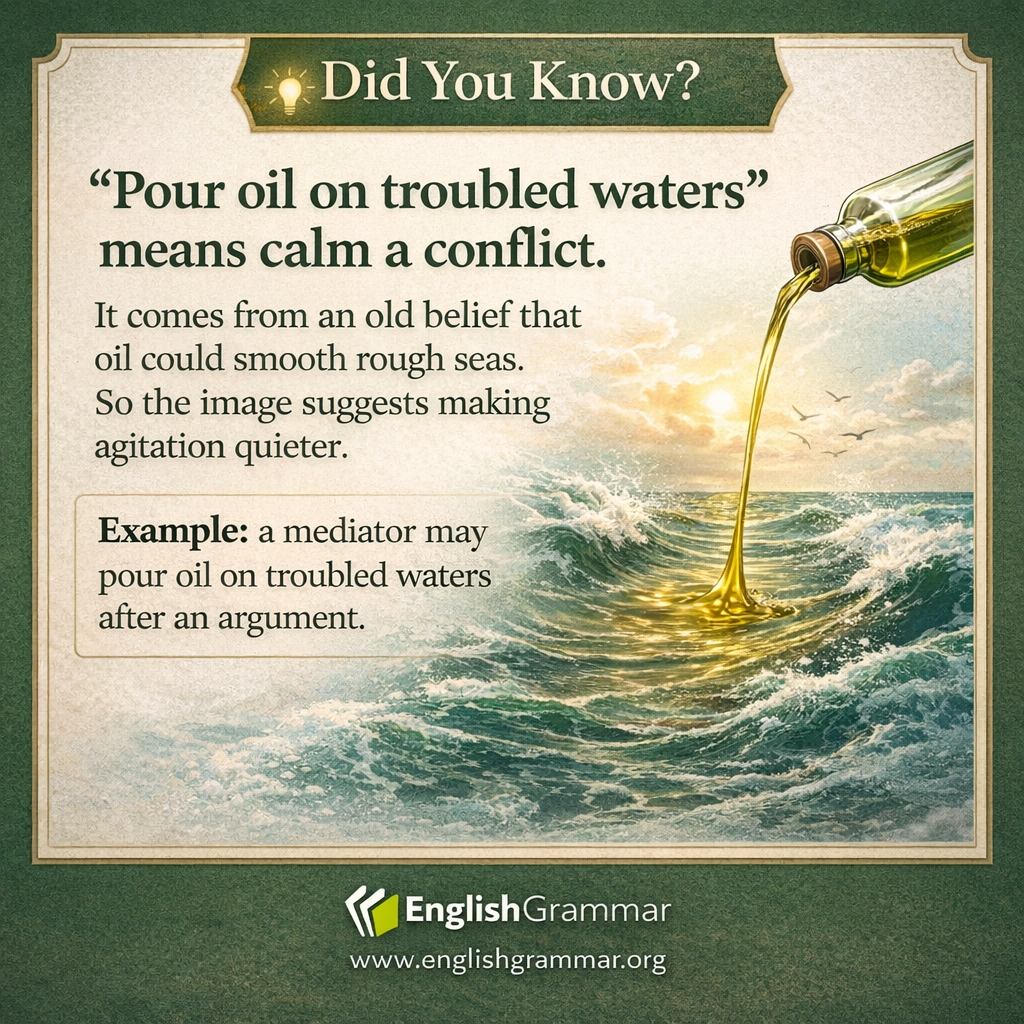
“Pour oil on troubled waters” means to calm a tense situation or reduce conflict between people. Today it is usually used figuratively, not literally.
The expression comes from an older belief that oil could smooth rough water. Sailors and writers observed that oil spread across the surface of water and seemed to quiet small waves. Because of that image, the phrase developed the sense of making trouble less violent or emotional.
In modern English, the idiom is common when someone helps people stop arguing or feel less upset. It suggests soothing, not solving every problem completely.
- Family conflict: “She tried to pour oil on troubled waters after the brothers argued.”
- At work: “His careful apology helped pour oil on troubled waters in the team.”
A useful contrast is add fuel to the fire, which means make a conflict worse. One idiom is about calming tension, the other is about increasing it.
