
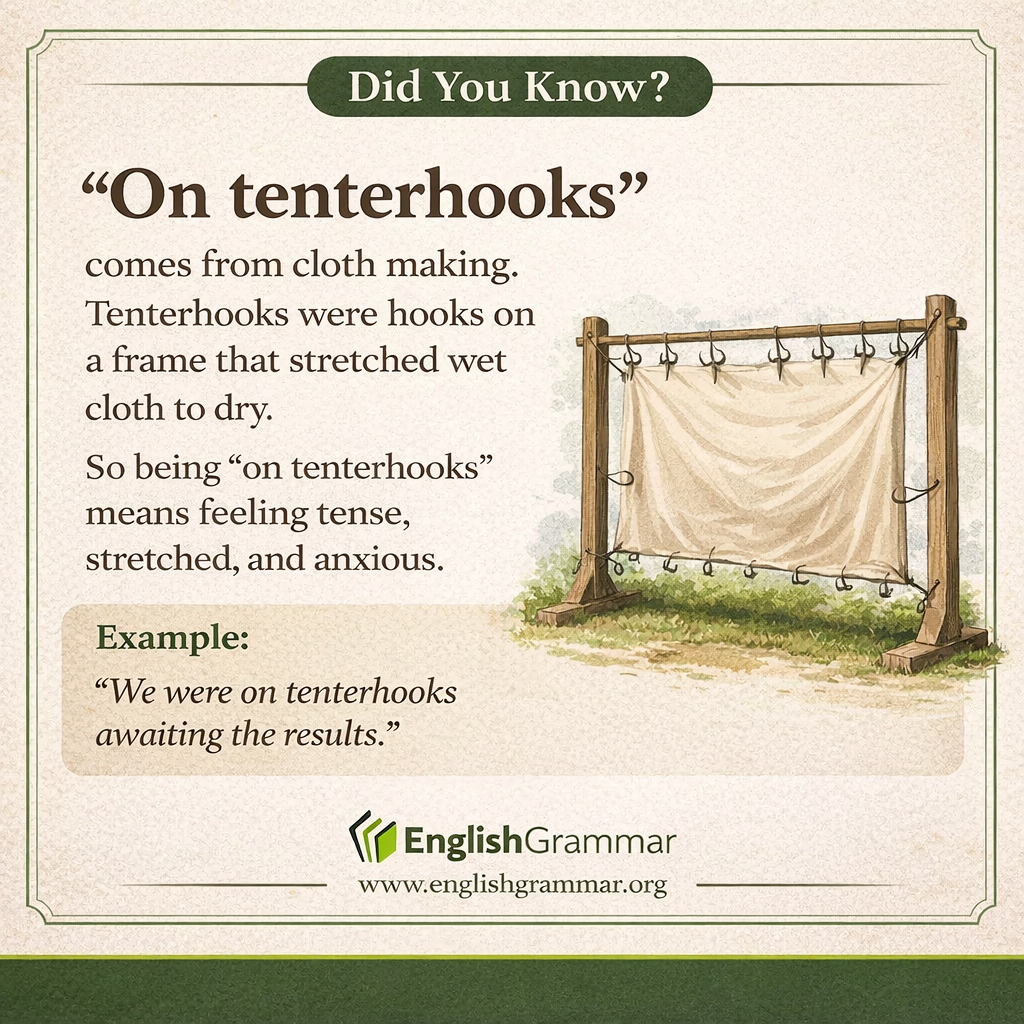
The phrase “on tenterhooks” comes from the language of cloth making. A tenter was a wooden frame used to stretch freshly made or washed cloth so it would dry evenly. The cloth was attached with tenterhooks, which held it tight while it dried.
That physical image, cloth pulled taut on hooks, gave English a vivid metaphor. If someone is on tenterhooks, they are in a state of tension, suspense, or nervous waiting. The idea is not comfort or relaxation. It is strain.
For example, you might say, We were on tenterhooks awaiting the exam results. You could also say, The whole family was on tenterhooks until the doctor called. In both cases, the meaning is the same: people are anxious because they are waiting for something important.
This is why the phrase still feels expressive today. Even if most speakers do not know the old textile tool, the history fits the modern meaning closely. The word picture is one of being stretched tight.
- Literal origin: hooks used to stretch cloth on a frame
- Modern meaning: anxious, tense, in suspense
- Example: They were on tenterhooks during the final minutes.
