
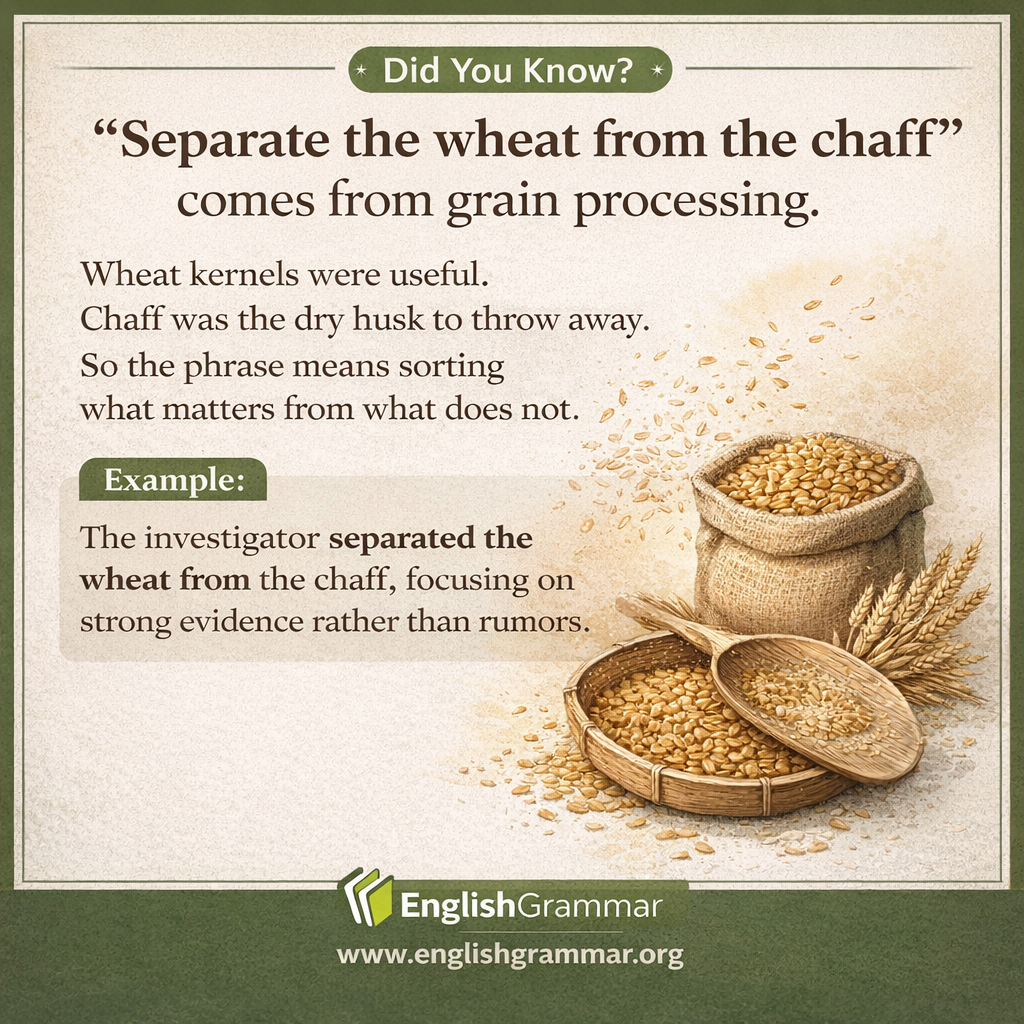
“Separate the wheat from the chaff” began as a literal farming expression. After wheat was harvested, workers had to separate the edible grain from the light, dry outer covering, called chaff. The wheat was kept because it was useful food. The chaff was discarded because it had little value.
That physical process gave English a figurative meaning. Today, the phrase means to sort out what is important, valuable, or true from what is worthless, distracting, or false.
People use it in many contexts, such as:
- Information: separating strong evidence from rumors
- Hiring: identifying the best candidates from a large pool
- Ideas: keeping practical suggestions and rejecting weak ones
The phrase works because the original image is so clear. One part is worth keeping, and one part is not. Even if most speakers never work with grain, the metaphor still feels natural and easy to understand.
