
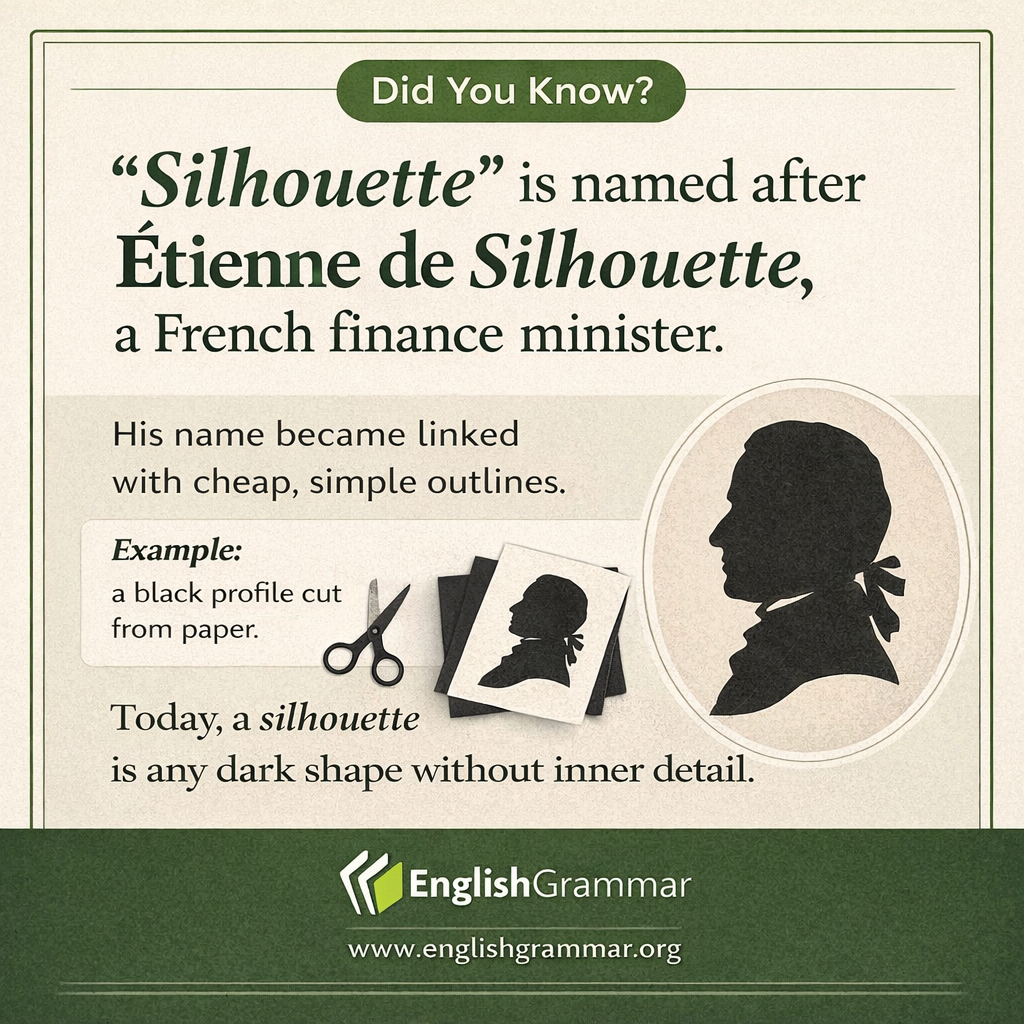
Silhouette comes from Étienne de Silhouette, a French finance minister in the 1700s. He was associated with strict money saving measures, so his name became a joking label for anything done cheaply or simply.
One result was the use of silhouette for a quick, inexpensive kind of portrait. Instead of a detailed painted likeness, a person could be shown as a plain dark outline, often a side profile cut from black paper.
Over time, the word widened in meaning. Today, a silhouette usually means a dark shape seen against a lighter background, with the inside details hidden.
- Historical use: a simple profile portrait cut from paper.
- Modern use: the silhouette of a tree at sunset.
So the word began with a real surname, moved into art and fashion, and now names a visual effect most people recognize instantly.