
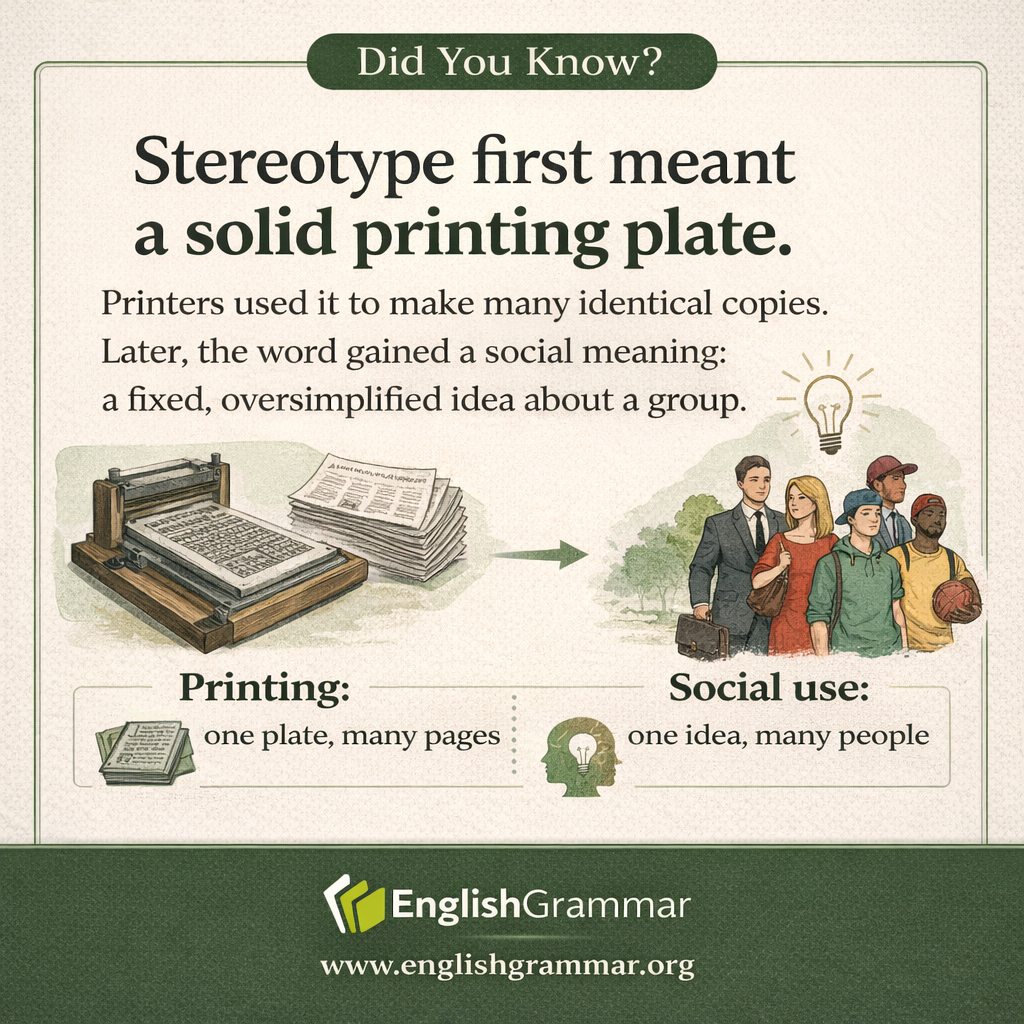
Stereotype did not begin as a word about people. It first belonged to the world of printing. A stereotype was a solid printing plate made from a set page, so printers could produce many identical copies without resetting all the type.
That older meaning helps explain the modern one. Over time, stereotype was applied to ideas about groups of people that get repeated as if everyone in the group is the same. In other words, one fixed pattern is treated like it fits many different individuals.
- Printing meaning: one plate, many matching pages.
- Social meaning: one oversimplified idea, applied to many people.
For example, saying that all members of a nationality, profession, or age group behave the same way is a stereotype. It ignores real differences between people.
The word’s history is useful because the older printing sense and the newer social sense share the same core idea: repetition of a fixed form. The modern meaning is not just about repetition, though. It also carries the idea that the repeated belief is too simple and often unfair.