
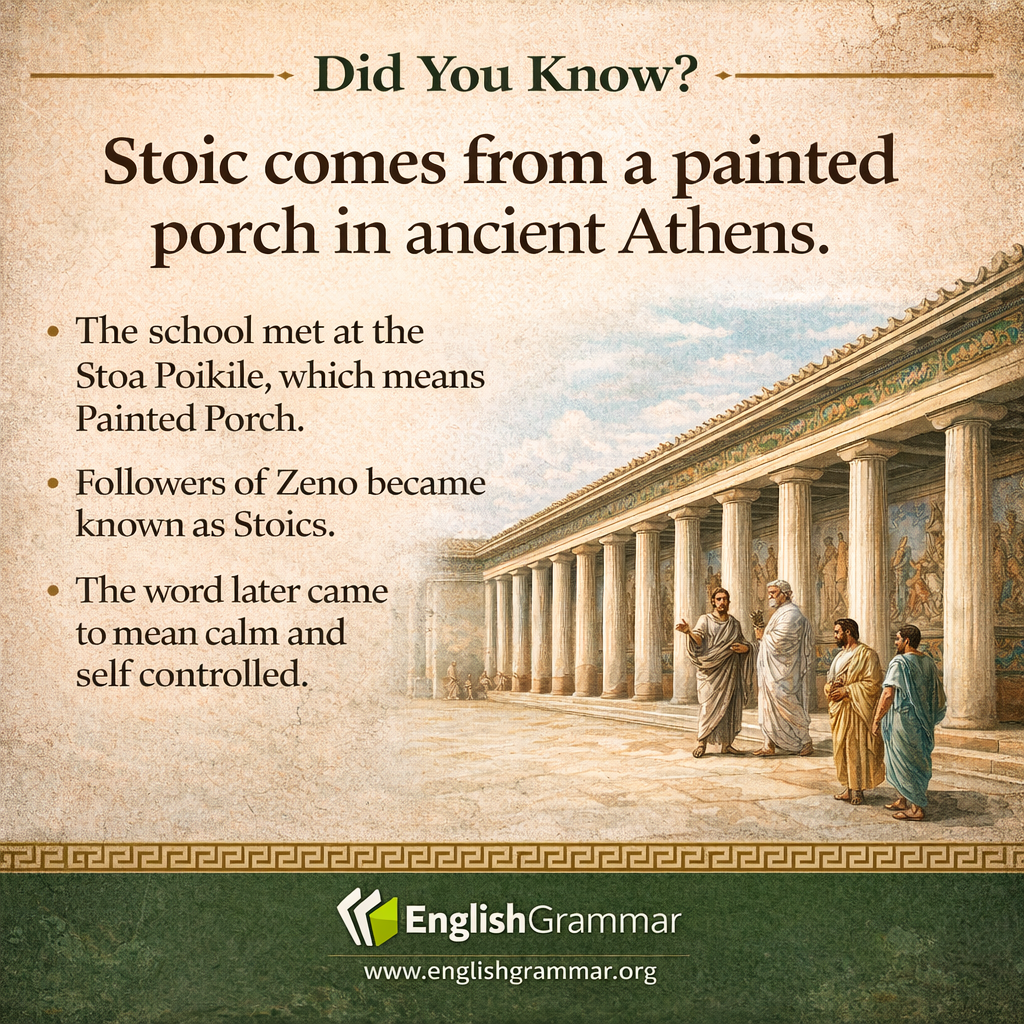
The word stoic did not originally mean calm, unemotional, or stern. It began as the name for people connected with a place in ancient Athens. The philosopher Zeno of Citium taught at the Stoa Poikile, a public colonnade whose name means Painted Porch.
Because Zeno and his students met there, people started calling them Stoics, meaning followers of the school that gathered at the stoa. In other words, the label came from the location first, then later developed a broader meaning.
Over time, stoic also became an everyday adjective for someone who stays calm under pressure or does not show much emotion. That modern sense grew out of Stoic philosophy, which emphasized self control, reason, and endurance.
- Original sense: a Stoic was a follower of the philosophical school linked to Zeno.
- Later common sense: a stoic person might remain composed during pain, stress, or hardship.
So when someone says a person is stoic today, the word carries the legacy of a very specific place, a painted porch in Athens where a major school of philosophy began.
