

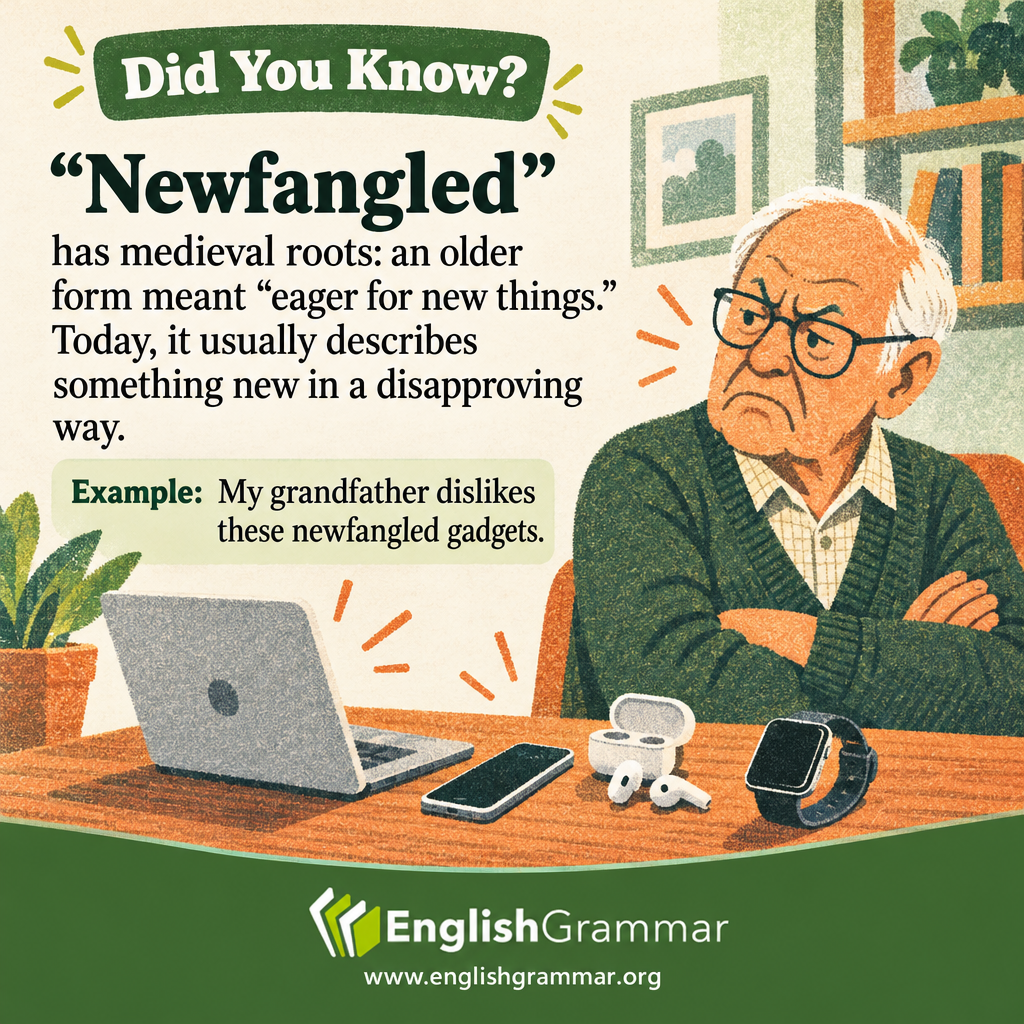
“Newfangled” has medieval roots, even though it describes new things. Its older Middle English form, newfangel, meant eager for novelty or inclined to take up new things. It could describe a person’s enthusiasm for whatever was new.
The first part is the familiar word new. The second part is linked to an old verb meaning “to take” or “to seize.” The historical idea was an eagerness to take hold of something new—not simply that an object had recently been invented.
Over time, the word came to describe new things themselves, especially unfamiliar inventions, methods, or fashions. In modern English, newfangled usually suggests that the speaker doubts whether a new thing is useful, sensible, or better than an older alternative.
- “My grandfather dislikes these newfangled gadgets.” This suggests that he is suspicious of the gadgets because they are unfamiliar.
- “Our office has a new printer.” This simply reports that the printer is new, without expressing disapproval.
The tone can also be playful. Someone who enjoys technology might jokingly complain about a “newfangled coffee machine” while learning how to use it.
Choose the word for its attitude, not just its meaning. If you only want to say that something is recent, use new. Use newfangled when you want to suggest skepticism about novelty, whether seriously or humorously.
