
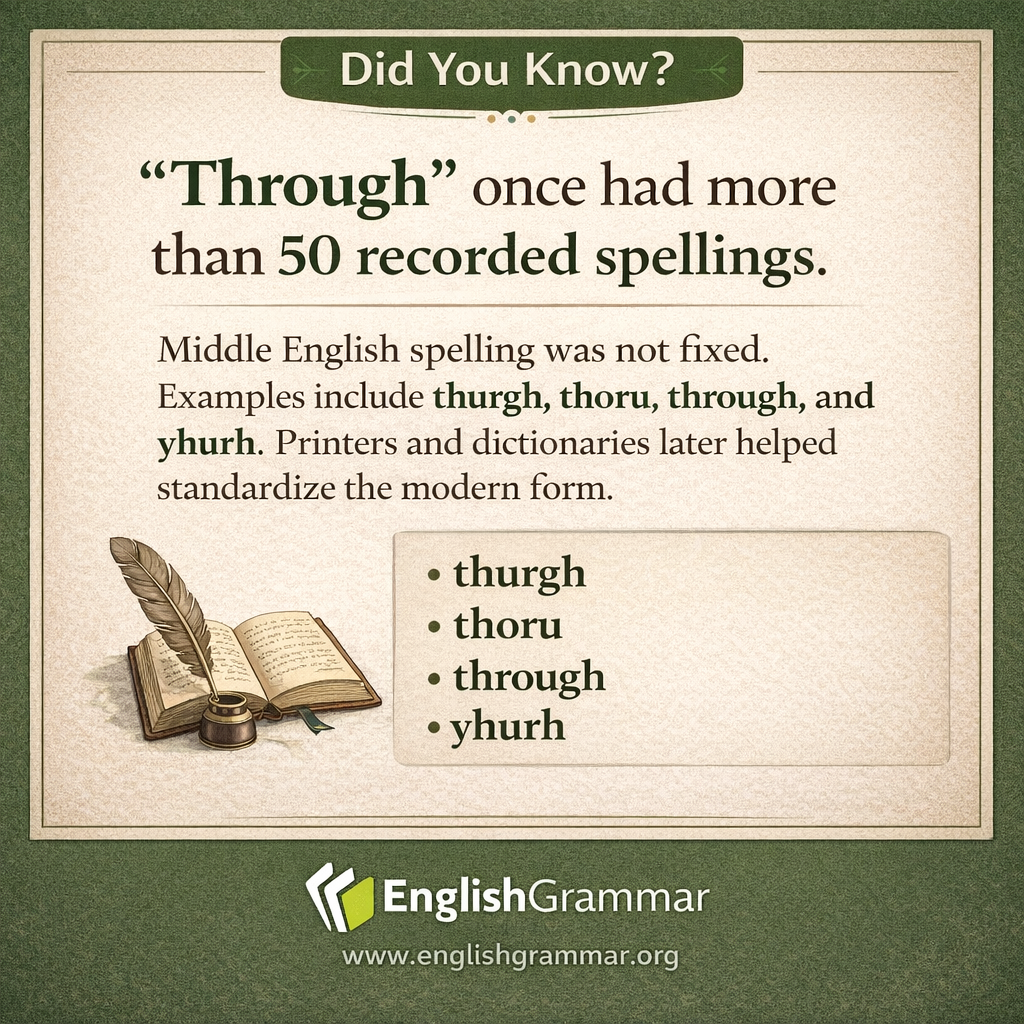
The word through has had a long and messy spelling history. In Middle English, spelling was far less standardized than it is today, so scribes often wrote words in different ways. A single word could appear in several forms, even within the same period.
For through, scholars have recorded more than 50 spellings across older texts. Some examples include thurgh, thoru, throgh, and yhurh. These forms reflect differences in region, handwriting habits, pronunciation, and the lack of official spelling rules.
Why so many versions? Several factors mattered:
- No fixed standard: Writers often spelled by sound or local custom.
- Regional variation: Different areas favored different forms.
- Changing English: Pronunciation and writing practices were still shifting.
- Later standardization: Printing, dictionaries, and schooling gradually promoted through as the regular spelling.
So the modern spelling may look stable now, but it is the result of centuries of variation. The history of through is a good reminder that English spelling was once much more flexible.
