
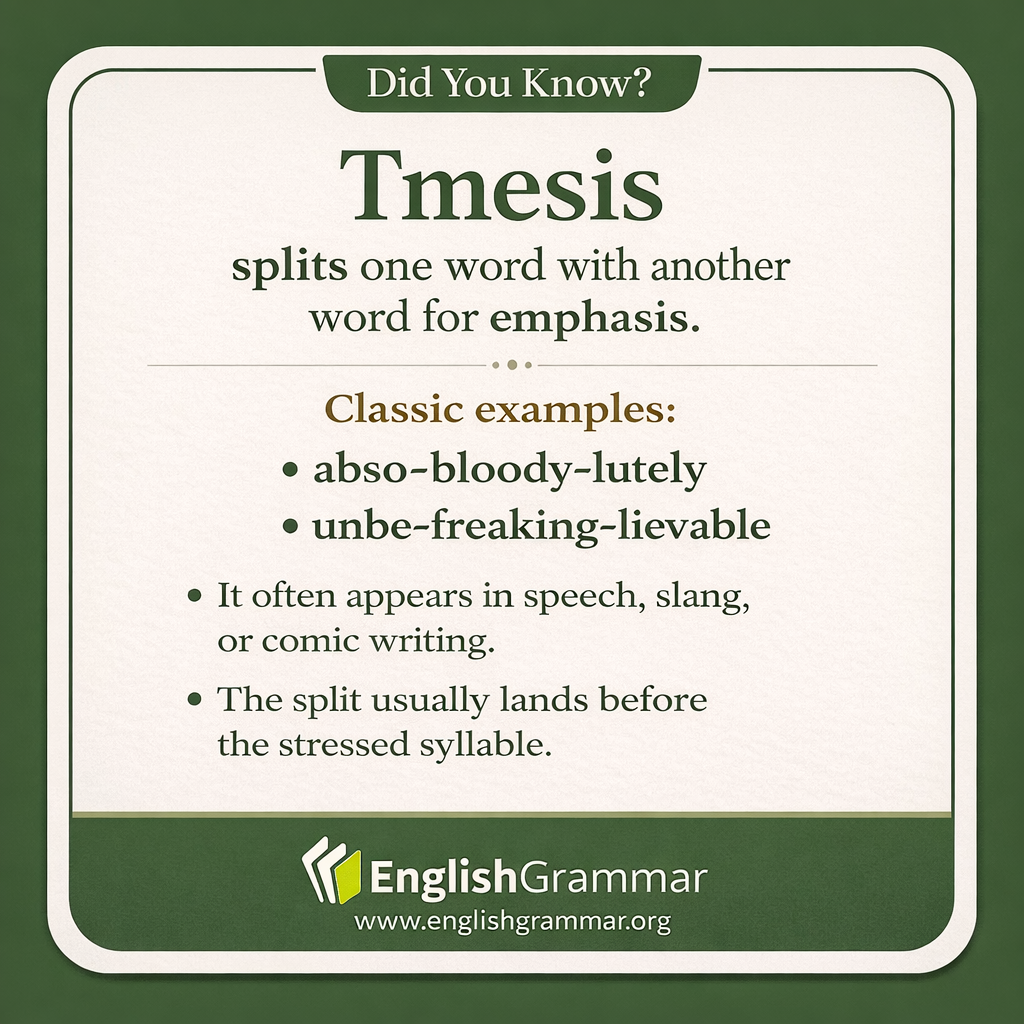
Tmesis is the rhetorical term for inserting a word or phrase into another word, usually to add emphasis, emotion, or comic effect. In modern English, it often appears in informal speech and writing.
Common examples include abso-bloody-lutely and unbe-freaking-lievable. These forms are not random. The inserted part usually appears just before the word’s stressed syllable, which helps the result sound natural to native speakers.
For example, many speakers accept fan-bloody-tastic more easily than a version split in the wrong place. The rhythm matters as much as the meaning.
- Purpose: emphasis, humor, surprise, or attitude
- Common setting: casual speech, fiction, dialogue, and playful writing
- Key pattern: the split often comes before the stressed syllable
So tmesis is not just random word breaking. It is a patterned, expressive feature of English that speakers use when they want a word to hit harder.
