
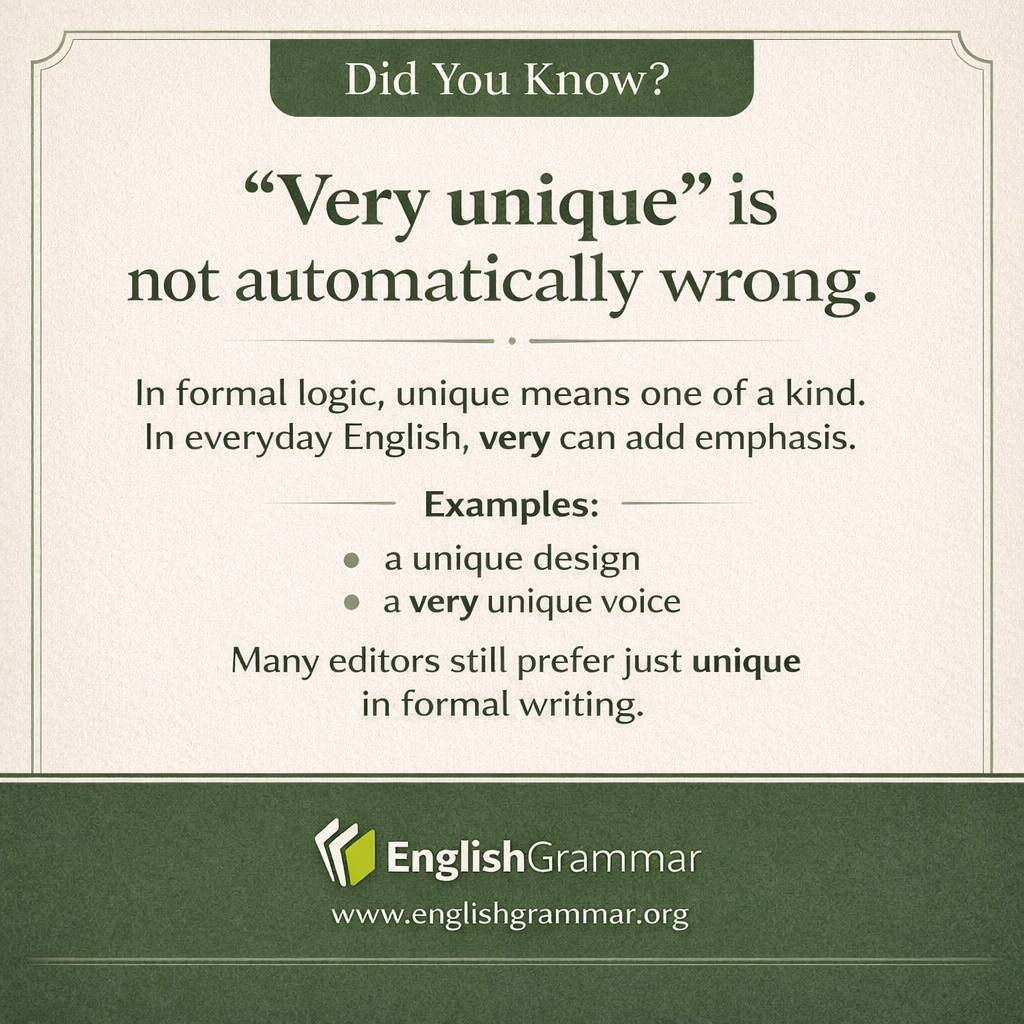
Unique traditionally means one of a kind. From that strict, logical point of view, something cannot be more unique, less unique, or very unique. It either is unique or it is not.
But everyday English does not always follow strict logic. Speakers often use very to add emphasis, not to measure degree. In that sense, very unique can mean something like especially unusual or strikingly distinctive.
- Formal writing: Many editors prefer unique alone. Example: The artist has a unique style.
- Everyday speech: Very unique is common and widely understood. Example: She has a very unique voice.
So the phrase is not automatically wrong. It depends on context, tone, and audience. If you want a careful, formal style, choose unique by itself. If you want a natural, conversational tone, very unique may sound fine.
