
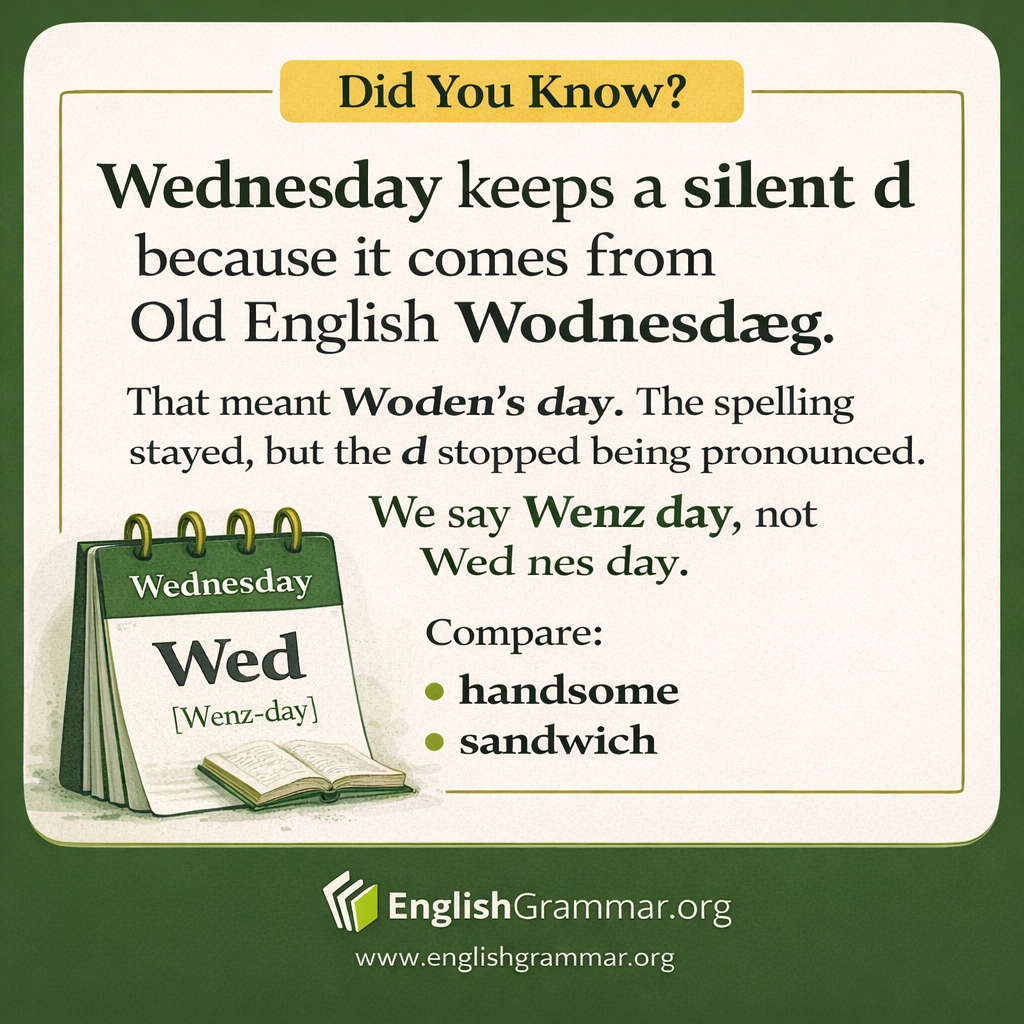
Wednesday has a silent d because English spelling often preserves a word’s history, even after pronunciation changes. The word comes from the Old English Wodnesdæg, which meant Woden’s day. Woden was a Germanic god, related to the Norse god Odin.
Over time, the pronunciation shifted. Speakers gradually stopped clearly saying the d, but the traditional spelling remained. That is why modern English usually says Wenz day rather than Wed nes day.
This kind of mismatch is common in English. Spelling can reflect an older form of a word, while speech becomes smoother and faster.
- Wednesday: spelled with d, usually pronounced Wenz day
- handsome: the d is not fully pronounced in normal speech
- sandwich: many speakers reduce sounds, often saying something closer to sanwich
So the hidden d in Wednesday is really a small record of the word’s past. English keeps many clues like this, where spelling tells an older story than pronunciation does.
