
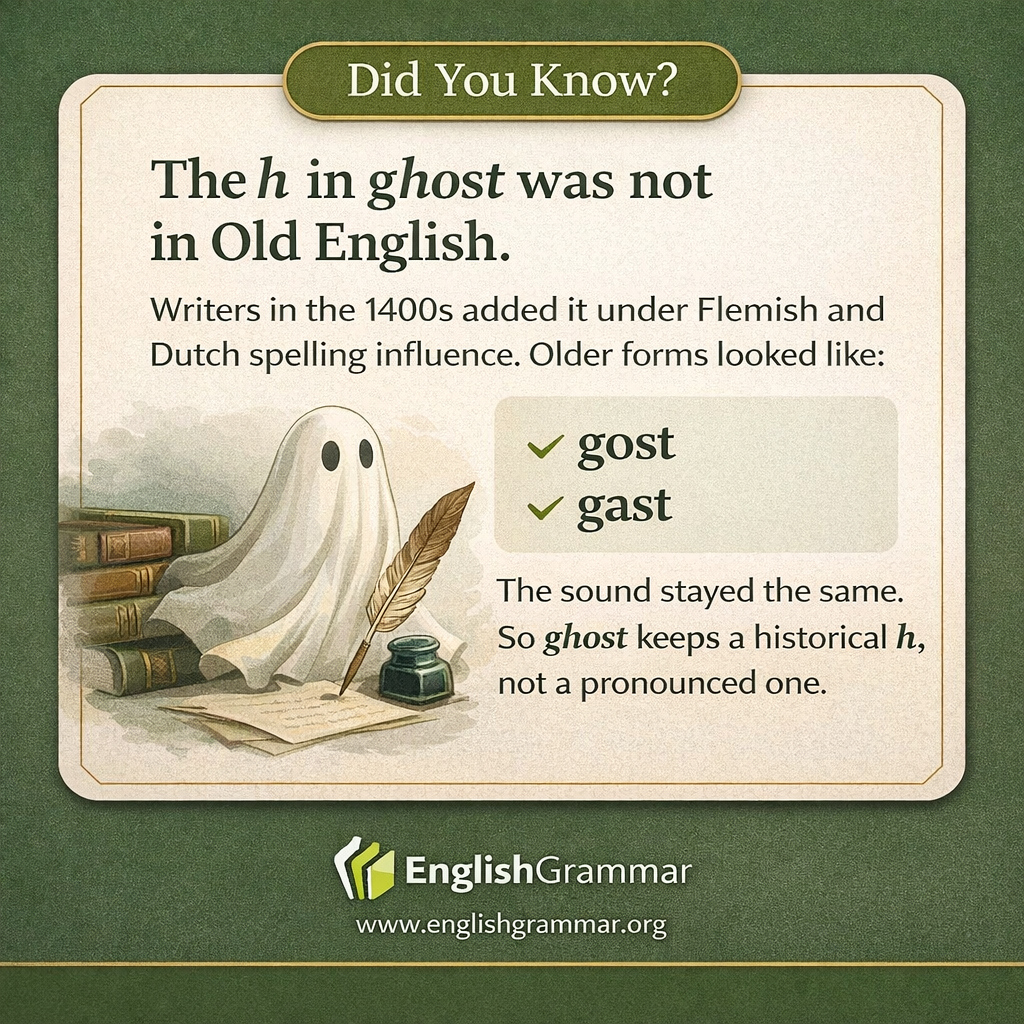
The h in ghost was not part of the original Old English spelling. Earlier forms appeared as gost or related forms without an h. During the 1400s, some scribes and printers were influenced by Flemish and Dutch spelling habits, and they began writing the word as ghost.
The important point is that the pronunciation did not gain a new sound. The added h was a spelling change, not a pronunciation change. That is why modern English keeps a silent h in ghost.
This kind of change is not unusual in English. Spelling was less fixed in the past, and writers often borrowed habits from other languages or regional writing traditions. Once printing helped standardize forms, some of those spellings stayed.
- Older spelling: gost
- Later spelling: ghost
- Pronunciation: basically the same initial sound, no spoken h
So the h in ghost is a historical spelling trace. It tells us more about medieval writing practices than about how the word is actually said.