
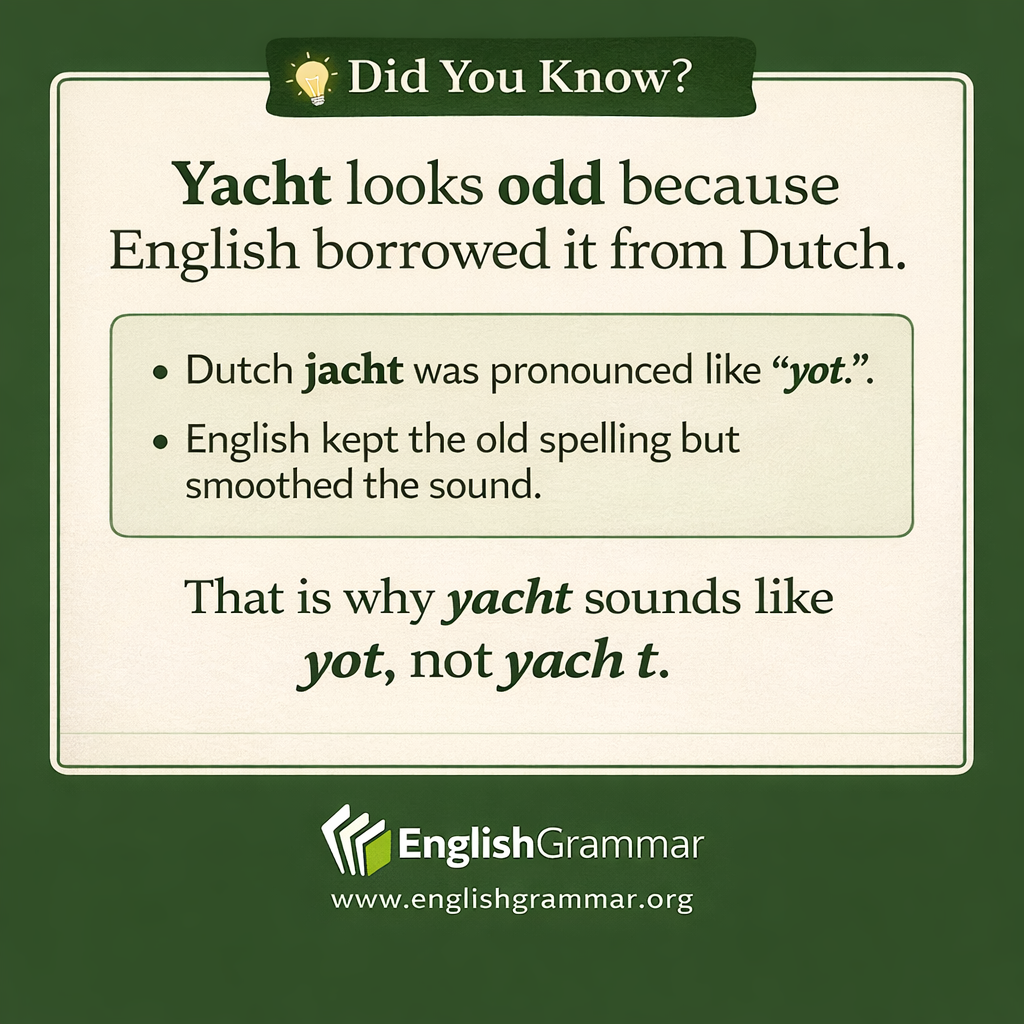
Yacht looks much stranger than it sounds because English did not build the word from its own usual spelling patterns. It borrowed the word from Dutch. The Dutch form was jacht, from a verb meaning to hunt or to chase.
In Dutch, jacht was pronounced more like yacht with a throaty sound in the middle. When English adopted the word, speakers gradually dropped that unfamiliar sound. The pronunciation became smoother, closer to yot, but the spelling stayed conservative.
That mismatch is common in borrowed words. English often keeps an older or foreign spelling even after pronunciation changes. So yacht preserves a record of where the word came from, even though modern English no longer says it the Dutch way.
- Dutch source: jacht
- Older sound: something like yacht with a guttural middle sound
- Modern English pronunciation: yot
So the spelling is not random. It reflects the word’s history: a Dutch borrowing whose written form stayed older than its spoken form.