
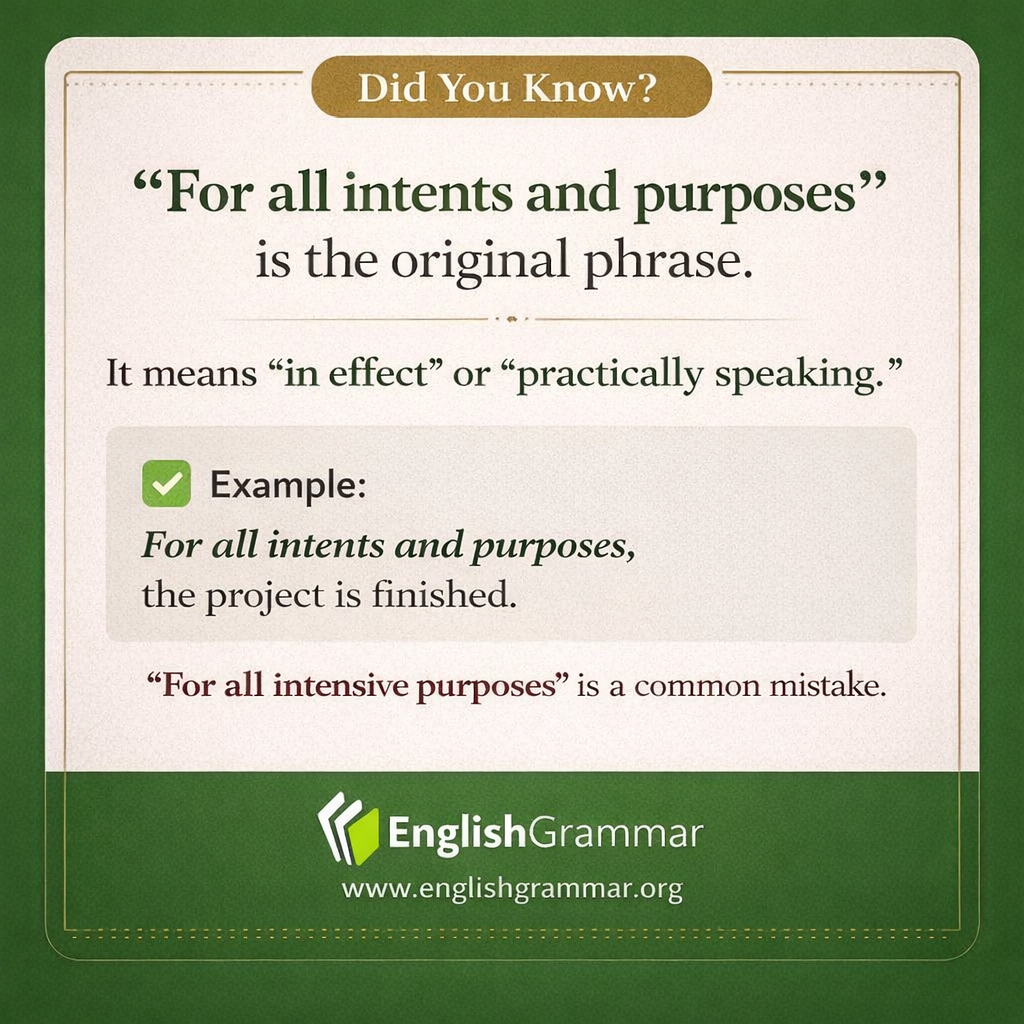
The standard expression is for all intents and purposes. It means in effect or practically speaking. People use it when something is close enough to true that the difference does not matter in the situation being discussed.
Example: For all intents and purposes, the project is finished. This means the project may still need a tiny final step, but it is finished in any practical sense.
A common mistaken version is for all intensive purposes. That wording sounds similar, which is why people often say or write it by accident, but it is not the original phrase.
- Correct: For all intents and purposes, the store is closed.
- Meaning: The store may not be officially closed yet, but it is effectively closed.
- Common error: For all intensive purposes, the store is closed.
If you want the standard idiom, choose intents and purposes. It is the established form in careful writing and edited speech.
