
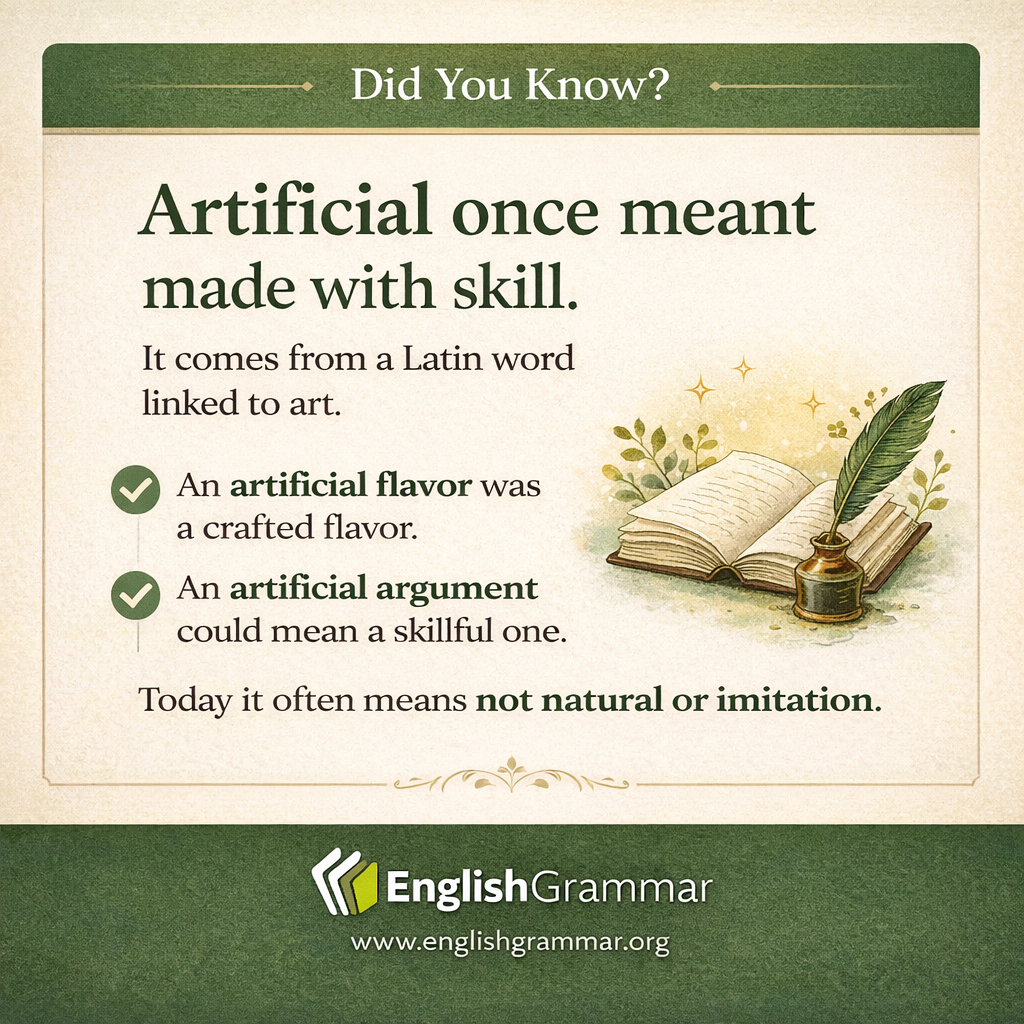
Artificial did not originally mean fake, phony, or inferior. It comes through Latin from a word related to art, in the older sense of skill, craft, or technique. So something artificial was something made by human skill.
That older meaning shows up in historical writing. An artificial flavor could simply mean a flavor that was carefully prepared. An artificial argument could mean a skillfully constructed argument. In both cases, the word pointed to craft, not necessarily deception.
Over time, common usage shifted. Today, artificial usually means something not natural, manufactured, or imitative. That is why modern readers often hear a negative contrast in phrases like artificial light or artificial flowers.
- Older sense: made by skill or art
- Modern common sense: not natural, human made, or imitation
- Helpful contrast: artificial once emphasized craftsmanship, now it often emphasizes difference from nature
This shift is a good reminder that word meanings change. Looking at older senses can make historical texts much clearer.
