
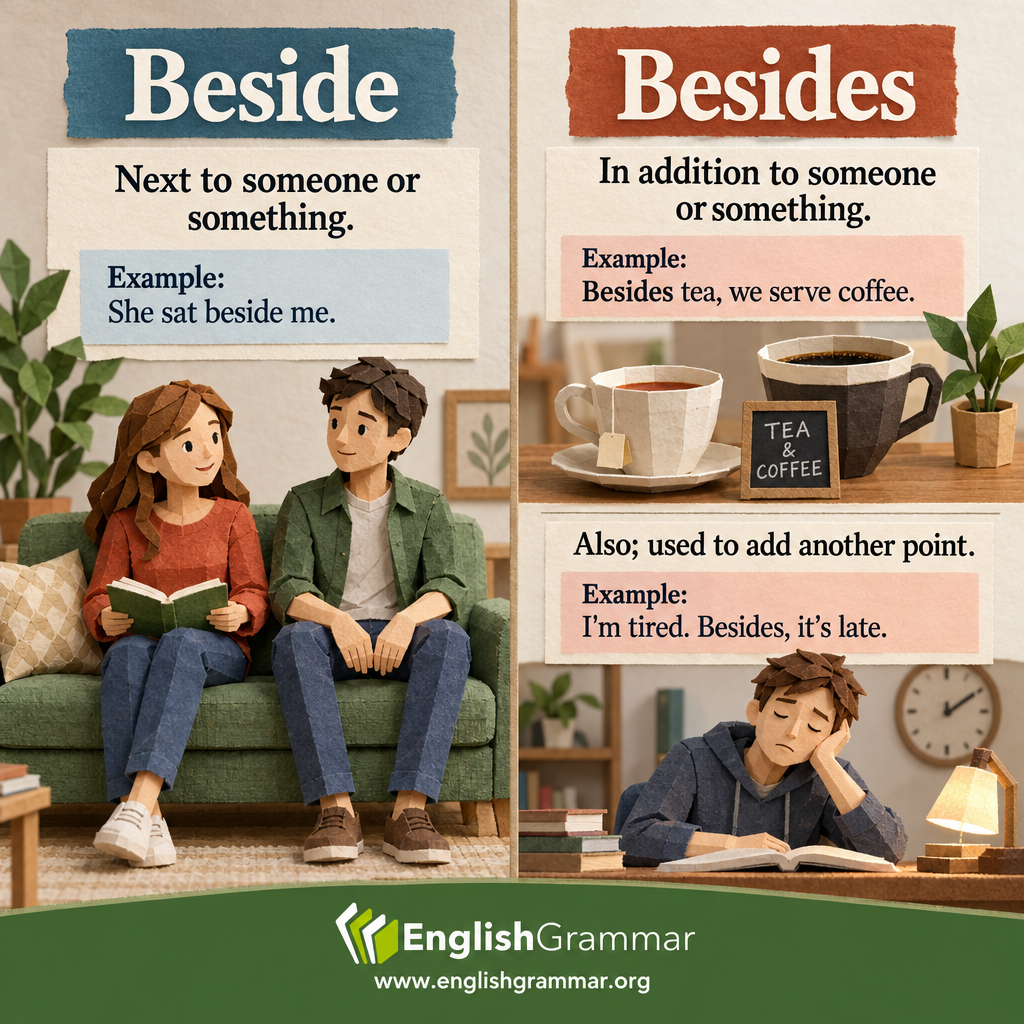
Beside and besides look similar, but they usually do different jobs. When describing where something is, choose beside. When adding something or making another point, choose besides.
Beside: next to
Use beside to show that one person or thing is next to another. It is followed by the person or thing that helps identify the position.
- The lamp is beside the sofa.
- Amir stood beside his brother.
In both sentences, the word describes a position, not an extra item.
Besides: in addition to
Use besides before a person, thing, or activity when you mean that something else is included too.
- Besides English, Rosa speaks Italian.
- Besides cooking dinner, he washed the dishes.
The first sentence names an additional language. The second adds another activity.
Besides: adding another point
You can also use besides to introduce an extra reason or comment. At the beginning of a sentence, it is usually followed by a comma.
- I don’t want to walk home. Besides, it’s getting dark.
Compare the meanings
“Who sat beside you?” asks about the person in the next seat. “Who came besides you?” asks which other people came. The small spelling difference changes the question from one about position to one about additional people.
