
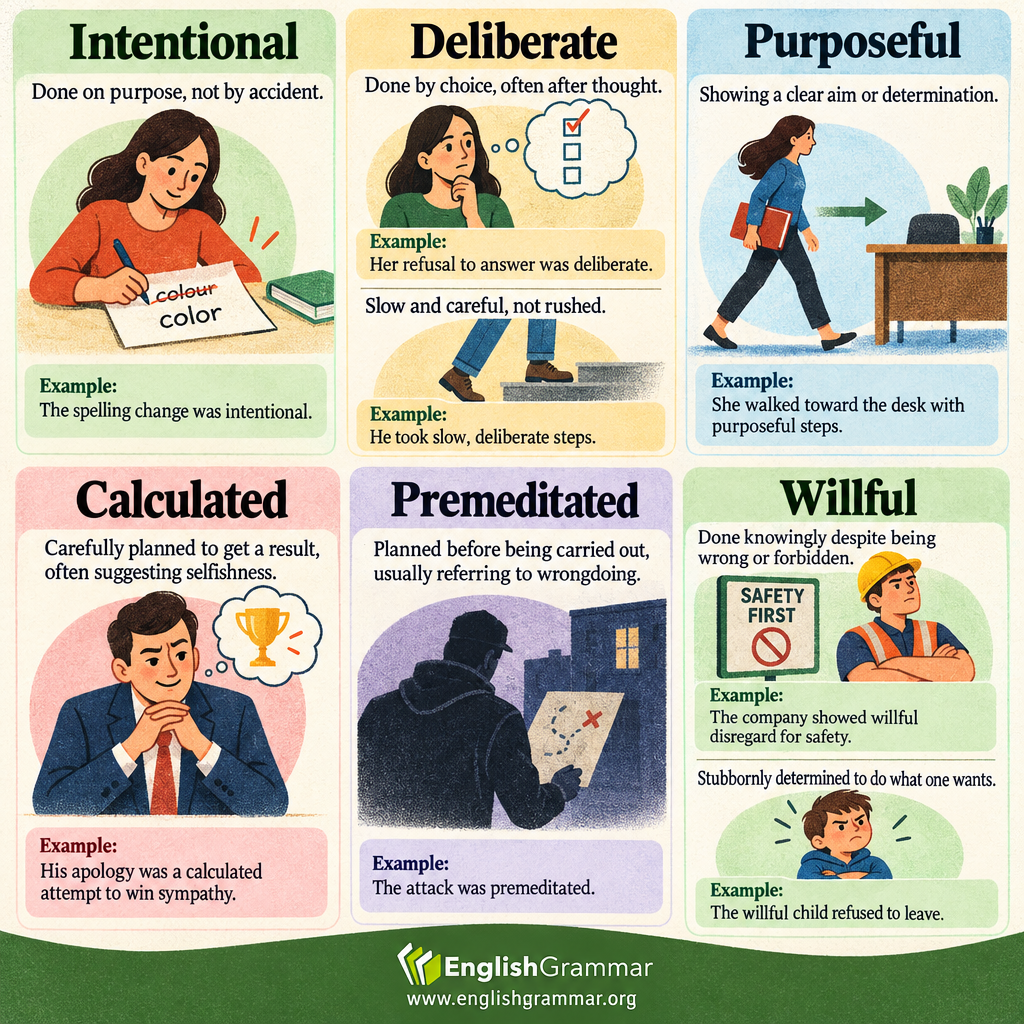
These six adjectives can describe actions that are not accidental, but they emphasize different things. They overlap, so the best choice depends on what you want to highlight.
- Intentional means done on purpose. It does not necessarily suggest detailed planning or a bad motive. The gap in the pattern is intentional.
- Deliberate can mean done by choice, often after thought: Leaving his name off the list was a deliberate decision. It can also mean slow and careful: She spoke in a calm, deliberate manner. In this second use, the emphasis is on care rather than simply avoiding an accident.
- Purposeful emphasizes a clear aim or determination. He approached the manager with a purposeful stride. It often describes how someone acts, rather than merely confirming that an action was intended.
- Calculated emphasizes planning to achieve a particular result, often suggesting selfishness or manipulation. Her flattering message was a calculated attempt to gain his support. However, a calculated risk simply involves weighing possible costs and benefits.
- Premeditated emphasizes planning before an action, usually wrongdoing. Investigators believed the robbery was premeditated. It is stronger and less natural than intentional for ordinary harmless choices.
- Willful often describes knowingly doing something wrong or forbidden: The report described a willful breach of the rules. It can also mean stubbornly determined to have one’s own way: The willful teenager rejected every suggestion.
An action may fit several of these descriptions. Choose the adjective that highlights the relevant detail, not simply the strongest-sounding word.