
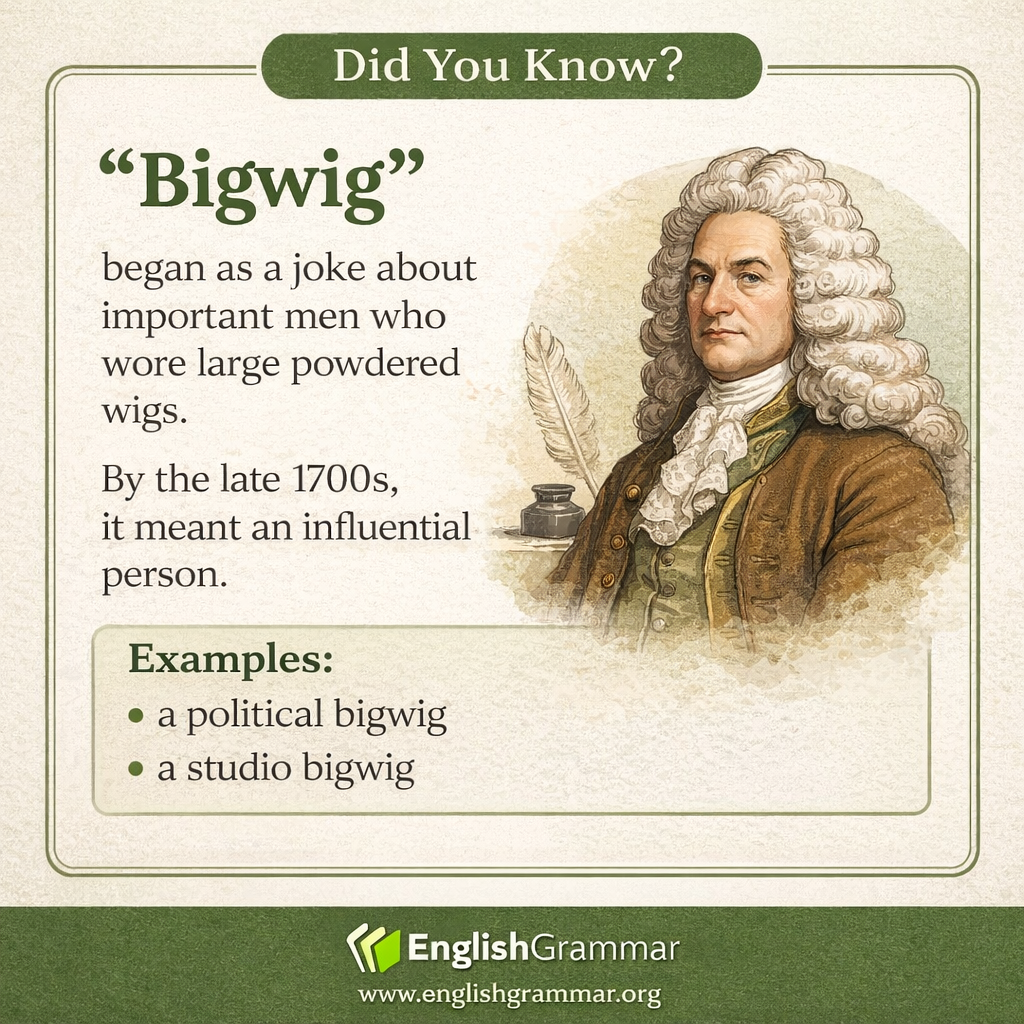
Bigwig originally referred, jokingly, to an important man who wore a large wig. In the 1700s, especially in Britain, judges, officials, and wealthy men often wore elaborate powdered wigs as part of formal dress. The bigger and more impressive the wig looked, the more status it could suggest.
From that image, bigwig developed into a figurative term for a powerful or high ranking person. By the late eighteenth century, people were using it without literally meaning a wig at all.
Today, the word is informal and often carries a slightly playful or mildly mocking tone.
- A political bigwig is an influential figure in politics.
- A studio bigwig is a powerful executive in the film business.
- You would not usually use bigwig in very formal writing.
So the word moved from clothing to social status: first a person with a very noticeable wig, then a person with noticeable power.