
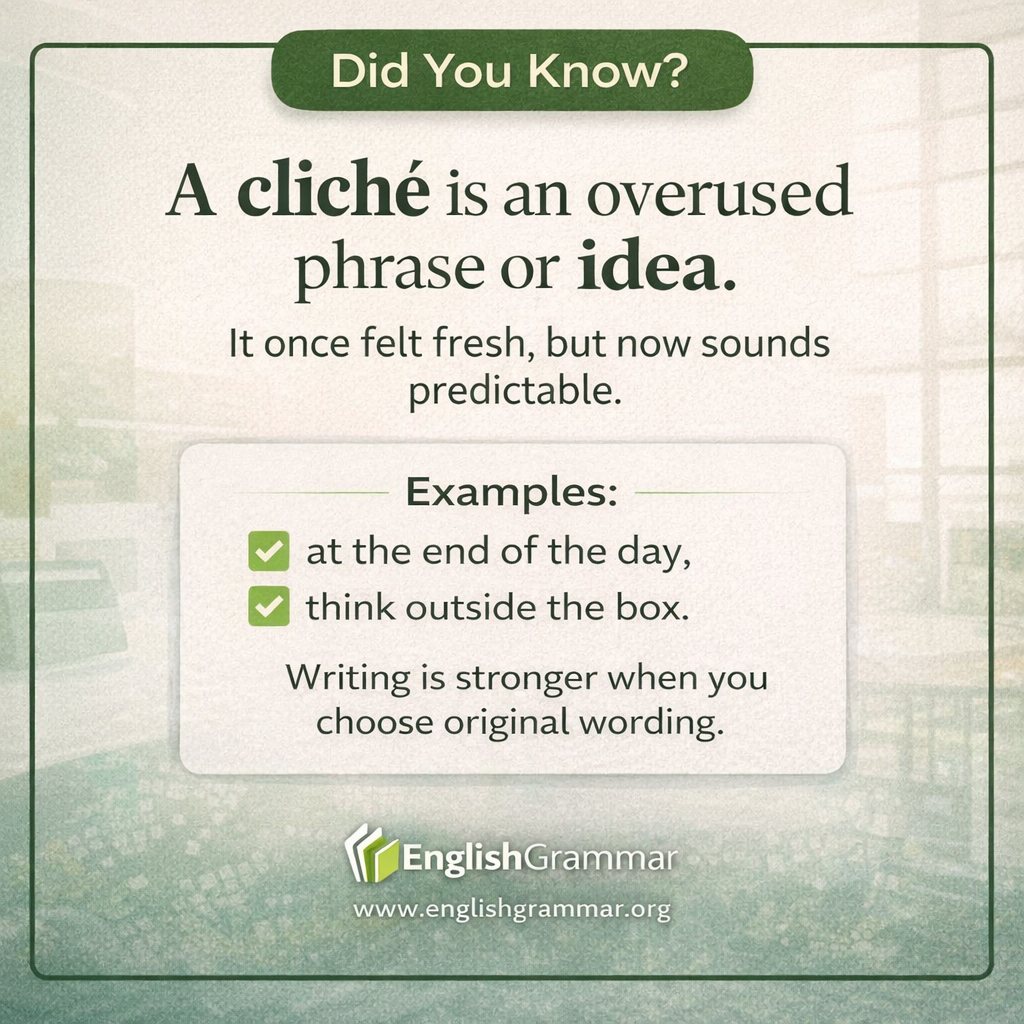
A cliché is a phrase, image, or idea that has been used so often that it no longer feels fresh. It may still be understood easily, but it can make writing sound predictable or lazy.
Common examples include at the end of the day, think outside the box, and every cloud has a silver lining. These expressions are familiar, but because readers have seen them many times, they usually add little impact.
Writers often avoid clichés when they want their language to feel specific and original. Instead of using a ready made phrase, it is usually stronger to describe the exact point.
- Cliché: She was as busy as a bee.
- Clearer version: She answered emails, took calls, and finished the report before noon.
Not every cliché is a mistake. In casual speech, clichés can be useful because they are quick and widely understood. But in careful writing, especially stories, essays, and ads, replacing them with precise wording usually creates a stronger effect.
