
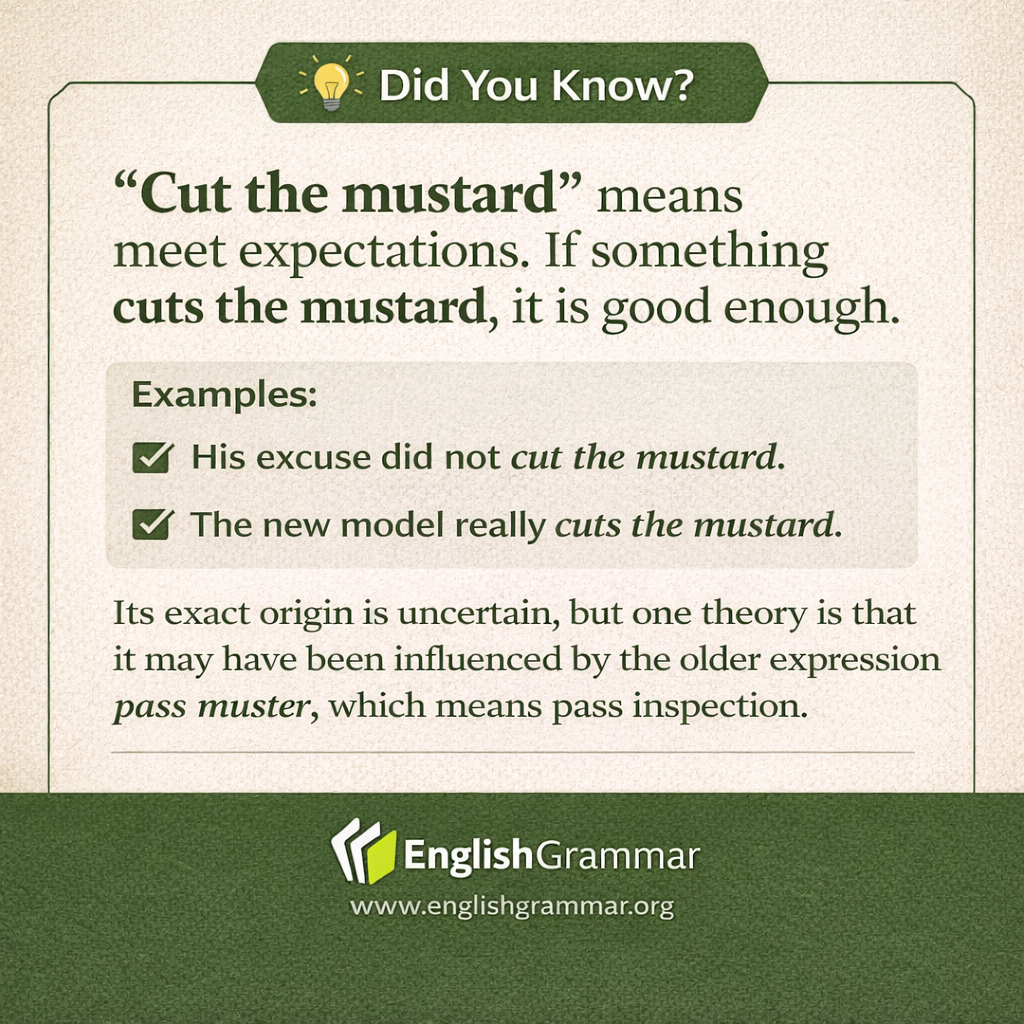
Cut the mustard means to be good enough, effective enough, or able to meet a standard. If something does not cut the mustard, it is not satisfactory.
Examples are simple: His excuse did not cut the mustard means the excuse was not convincing enough. The new model cuts the mustard means it performs well enough for the job.
The exact origin is uncertain. One common theory connects the phrase to mustard as something strong or sharp, suggesting energy or force. Another links it to older uses of cut meaning handle or succeed. There is also a theory that it may have been influenced by the older expression pass muster, which means pass inspection.
What matters most for modern English is the meaning:
- Positive: This candidate cuts the mustard.
- Negative: That plan does not cut the mustard.
- General sense: it meets expectations.
So even though the history is debated, the current use is clear. It is a colorful way to say that something is, or is not, good enough.
