
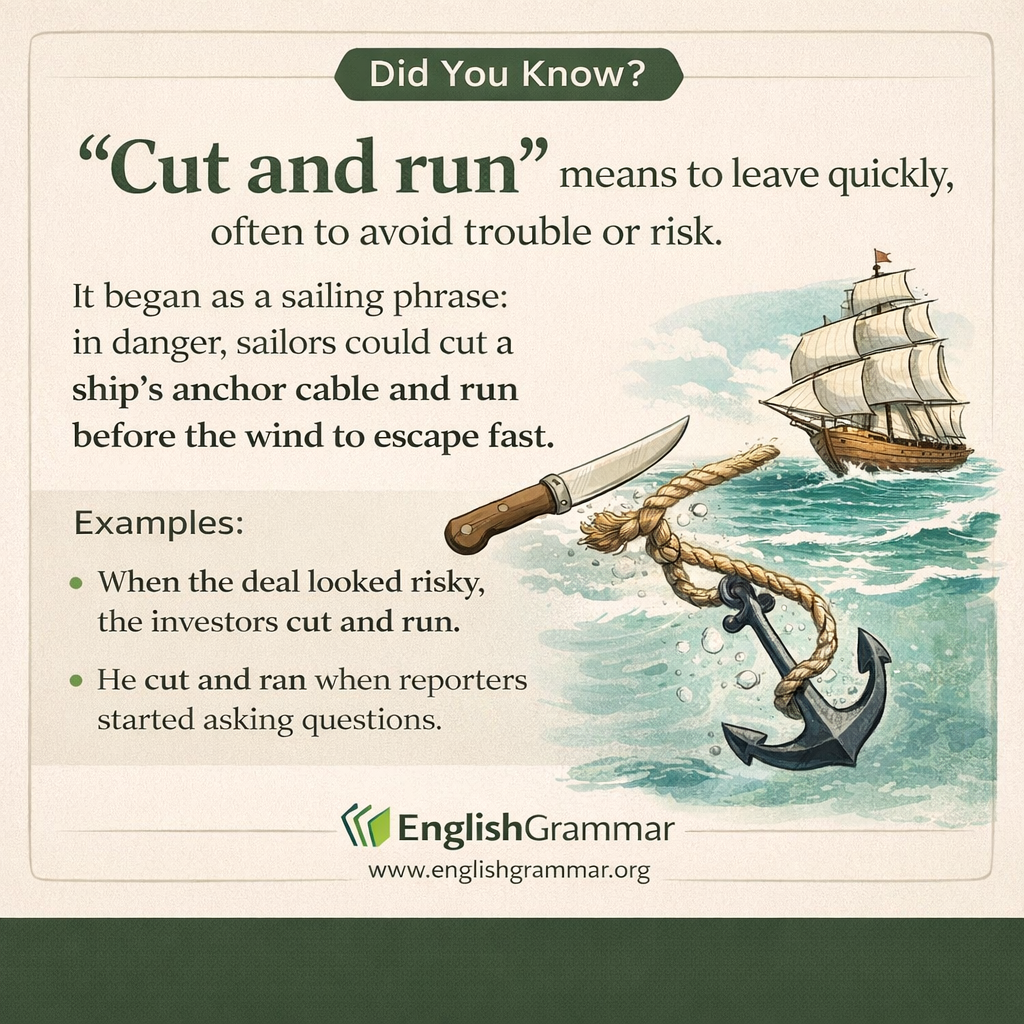
Cut and run means to leave quickly, especially when a situation becomes risky, difficult, or uncomfortable. In modern English, it often suggests escaping instead of staying to deal with the problem.
The expression comes from sailing. In an emergency, a ship might cut its anchor cable and then run before the wind. This let the ship move away fast, even though it meant losing the anchor. That image explains the modern meaning clearly: speed mattered more than holding position.
Today, people use the phrase in everyday and professional situations. It can describe someone leaving because they fear trouble, criticism, or loss.
- When the market turned unstable, some traders cut and run.
- He promised to help, but cut and ran when the work became difficult.
The phrase is usually critical. It often implies that someone left too soon or avoided responsibility. Because of that, it is different from simply saying someone left or withdrew, which can sound more neutral.
