
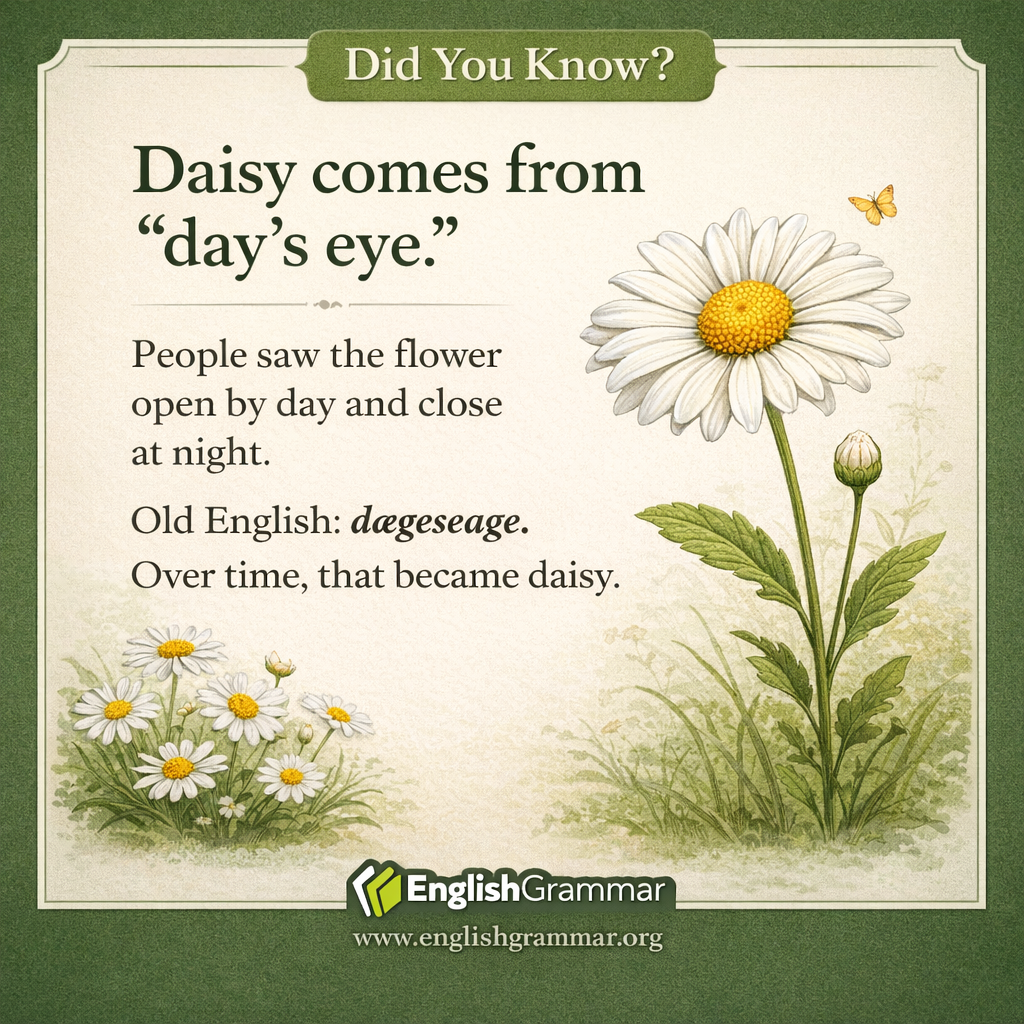
Daisy comes from an old expression meaning day’s eye. The idea is simple: people noticed that the flower opens in daylight and closes again when night comes, so it seemed to act like an eye of the day.
In Old English, the word was dægeseage. Over many centuries, pronunciation and spelling changed, and that older form gradually became daisy.
This kind of word history is common in English. Everyday observations often shaped plant names, especially long before scientific naming was standard. In this case, the flower’s daily pattern gave people a vivid, memorable name.
A quick way to remember it is this:
- day: the flower opens
- night: the flower closes
- day’s eye: a poetic name based on that pattern
So when you hear daisy, you are hearing a shortened modern form of an old descriptive phrase. The name preserves a small piece of how earlier English speakers observed the natural world.
