
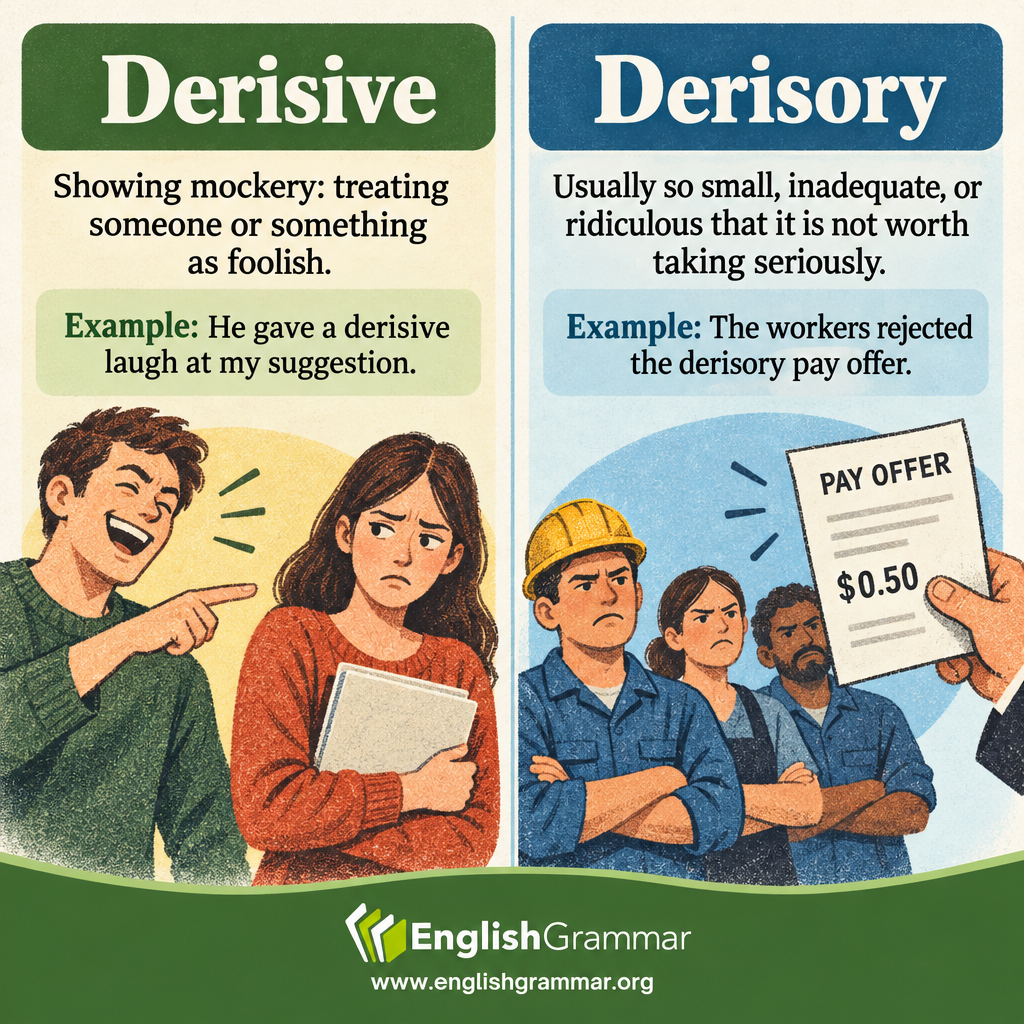
Derisive and derisory both relate to ridicule, but they usually describe different things. The most useful distinction is between showing mockery and deserving to be dismissed as ridiculous.
Derisive describes words, sounds, expressions, or behaviour that show someone thinks a person or idea is foolish. It often appears with words such as laugh, comment, smile, and tone.
- His suggestion was met with derisive laughter.
- She made a derisive remark about my cooking.
In both examples, someone is expressing mockery. The word describes the reaction or attitude, not whether the suggestion or cooking actually deserves criticism.
Derisory usually describes something so small, inadequate, or ridiculous that it does not deserve serious consideration. It is especially common in British English, often with offer, amount, payment, or compensation.
- The company offered derisory compensation for the damage.
- They rejected the derisory pay rise.
Here, the criticism concerns how inadequate the compensation or increase is. The amount may seem insulting, but it does not itself express mockery.
Compare a derisive response to an offer with a derisory offer. The first describes a mocking response; the second judges the offer as not worth taking seriously.
The meanings can overlap: derisory can also mean mocking. However, the distinction above is a useful guide to their common modern uses, not an absolute rule.