
• Skip to primary navigation
  • Skip to main content
  • Skip to primary sidebar
Home of English Grammar
  • Home
  • Course
  • Exercises
  • Grammar Rules
  • Matches
  • Posts
  • Tools
    • Grammar Checker
    • Very Replacer
    • Word Counter
  • Vocabulary Lists
  • Archives
    • Social Media Posts
    • Writing Guides
  • Sign in
  • Join free

What “the early bird catches the worm” means, and where it comes from

June 6, 2026

The origin of "the early bird catches the worm"

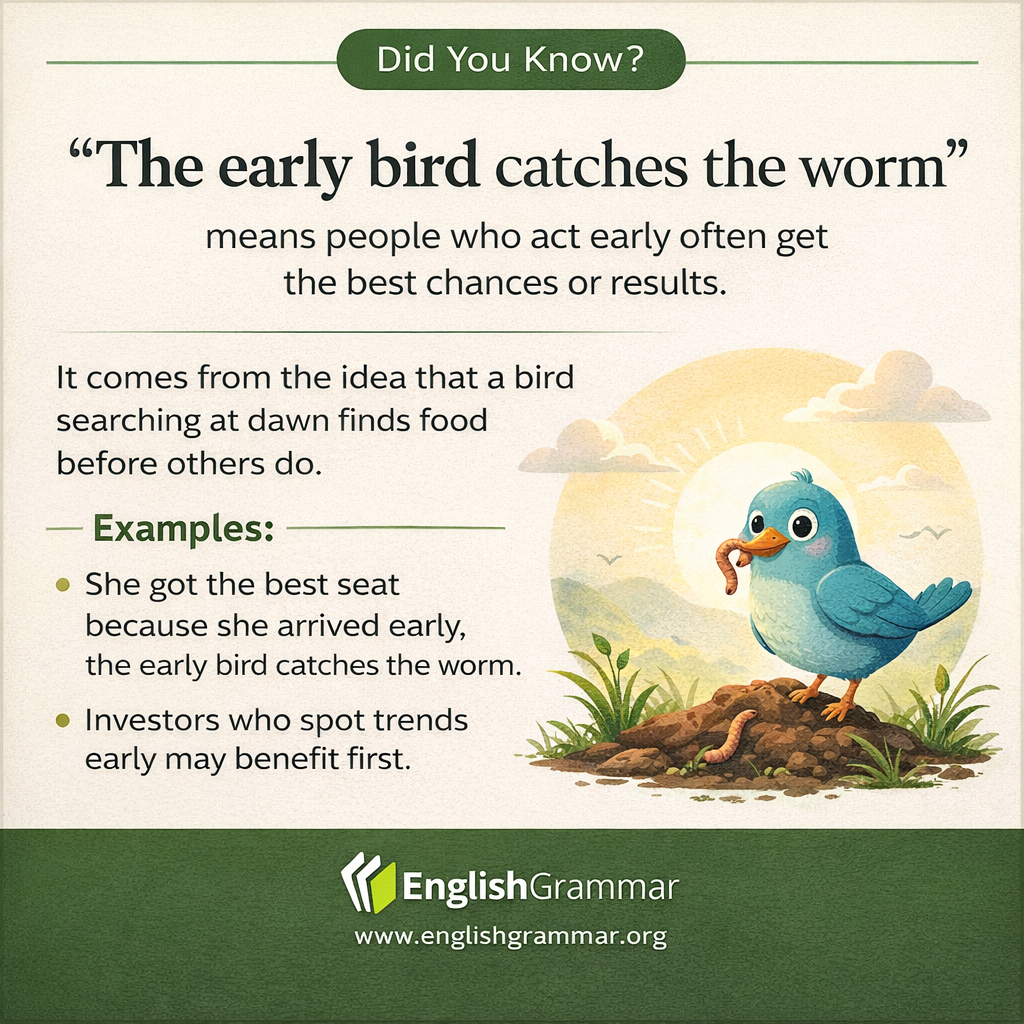
“The early bird catches the worm” is a common English saying about timing. Today, it means that people who start early, arrive early, or notice opportunities first often get the best results.

The image is simple: a bird that begins looking for food at dawn may find a worm before other birds do. That concrete picture helps explain why the saying became so memorable. It connects early action with success.

People now use the expression in many everyday situations, not just for waking up early. It can refer to applying for a job, getting tickets, shopping a sale, or starting work before others.

  • We got the cheapest tickets because we booked early. The early bird catches the worm.
  • She arrived before the crowd and found a parking space right away.

The saying is usually positive, but it is not a strict rule. Acting early helps most when there is limited time, limited space, or a chance that may disappear. In that sense, the expression is really about being prompt and prepared, not simply about getting out of bed first.

Improve your English grammar, vocabulary and writing

We take you step by step from beginner to advanced, even if you struggled with English at school or have always had trouble remembering the rules.

  • 10 modules, 112 lessons and 730 questions
  • Just log in and learn anytime and anywhere
  • Your progress is saved in your account
  • Download the 2027 Grammar Guide (PDF)
Join free

Already have an account? Sign in

See what’s in the course

Primary Sidebar

2.4M760.9K165.9K

Free 2027 Grammar Guide

  • Download Grammar Guide (PDF)
  • Online grammar course, A1 to C2
  • Weekly exercises and vocabulary
  • Join over 3 million English learners

We respect your privacy. Unsubscribe anytime.

Already have an account? Sign in

Grammar Checker - Try Now

Latest Posts

  • 100 Best Synonyms for “Deceitful” October 30, 2026
  • 100 Best Synonyms for “Transparent” October 30, 2026
  • Useful, helpful, beneficial, advantageous, valuable and invaluable: how to choose October 30, 2026
  • 100 Commonly Misused Words Every Adult Should Know October 30, 2026
  • Abstruse vs. obtuse vs. obscure vs. esoteric vs. arcane vs. recondite October 30, 2026
  • The origin of “once in a blue moon” October 30, 2026
  • 100 Best Synonyms for “Harmful” October 30, 2026
  • Superlatives Exercise October 30, 2026
  • Six ways to talk about privacy and secrecy in English October 30, 2026
  • 100 Best Synonyms for “Training” October 30, 2026
Home of English Grammar

Free English grammar exercises, rules and vocabulary lists, with new exercises every week. Join the leading English grammar site with over 3 million followers.

Join free

Learn

  • Exercises
  • Matches
  • Grammar rules
  • Vocabulary lists
  • Writing guides
  • Online tools

More

  • Top social media posts
  • Various posts
  • Contact

Account

  • Join free
  • Grammar Course
  • Free grammar guide (PDF)

Copyright © 2026 EnglishGrammar.org

  • Disclaimer
  • Privacy policy
  • Terms
  • Sitemap