
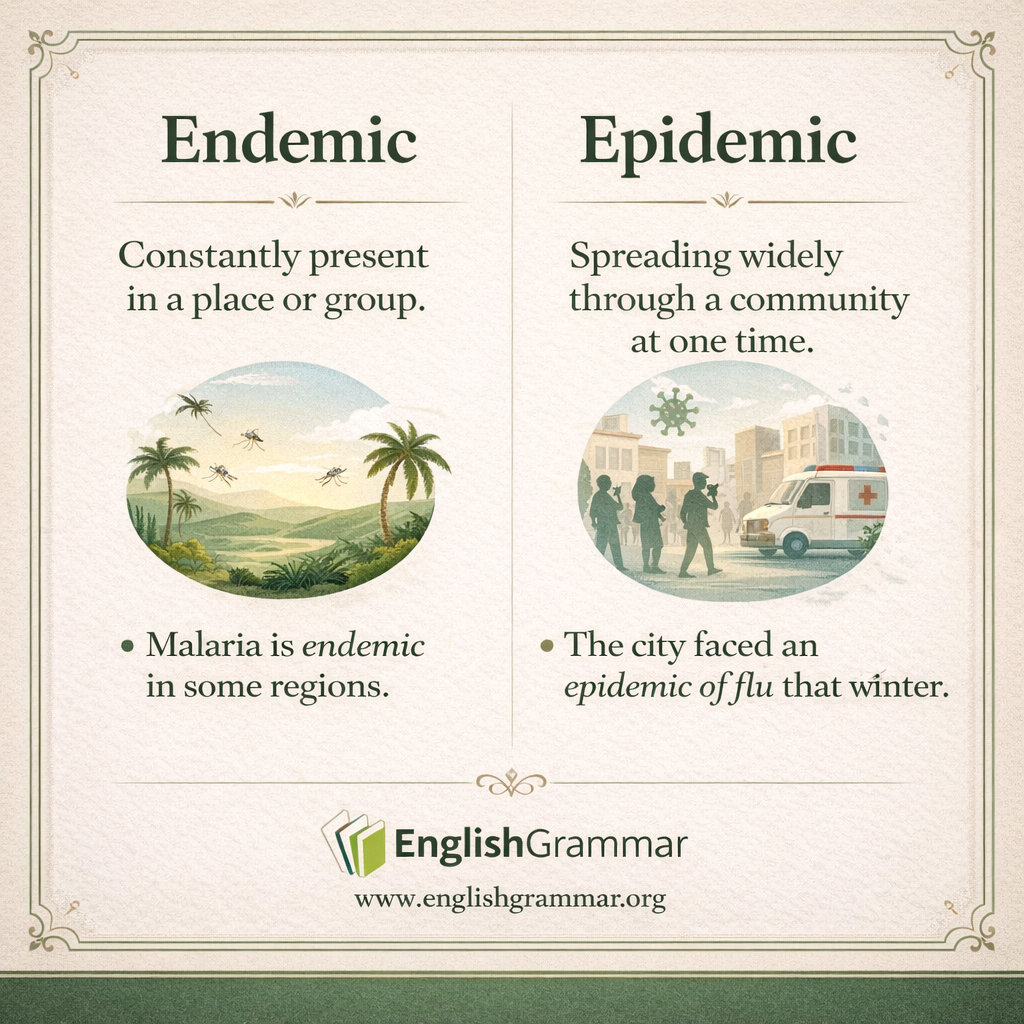
Endemic and epidemic both describe disease patterns, but they are not interchangeable.
Endemic means a disease is consistently present in a particular place, population, or environment. It may occur at a steady or expected level over time. For example, malaria is endemic in some tropical regions, which means it remains regularly present there.
Epidemic means there is a sudden increase in cases within a community or region. It describes a disease spreading more widely than normal over a period of time. For example, a city can experience an epidemic of flu during a harsh winter if cases rise quickly.
- Use endemic for something expected and ongoing in a specific area.
- Use epidemic for a fast, widespread outbreak affecting many people at once.
A simple way to remember the contrast is this: endemic is established presence, while epidemic is unusual spread.
