
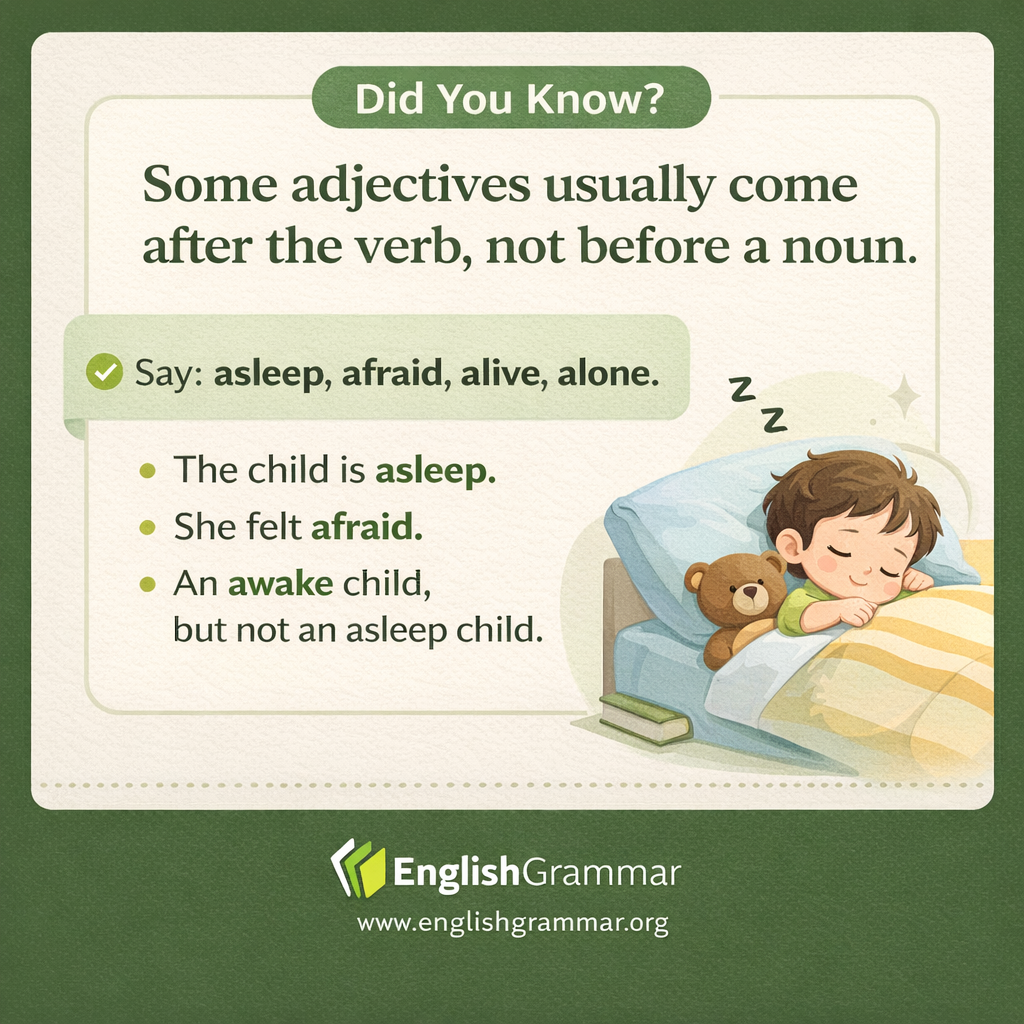
Some English adjectives are usually predicative. That means they normally come after a verb, often be, seem, feel, or become, rather than directly before a noun.
Common examples include asleep, afraid, alive, and alone. We say, The baby is asleep, I feel afraid, The fish is still alive, and He was alone.
These words usually do not sound natural before a noun. For example, an asleep baby and an afraid child are not the usual choices in standard English.
Often, English uses a different adjective before the noun:
- an awake baby, but The baby is asleep
- a frightened child, but The child felt afraid
- a living plant, but The plant is alive
This is a useful pattern to notice: some adjectives describe a state and are most natural after the verb. Learning them as complete chunks, such as is asleep or felt afraid, can help you sound more natural.
