
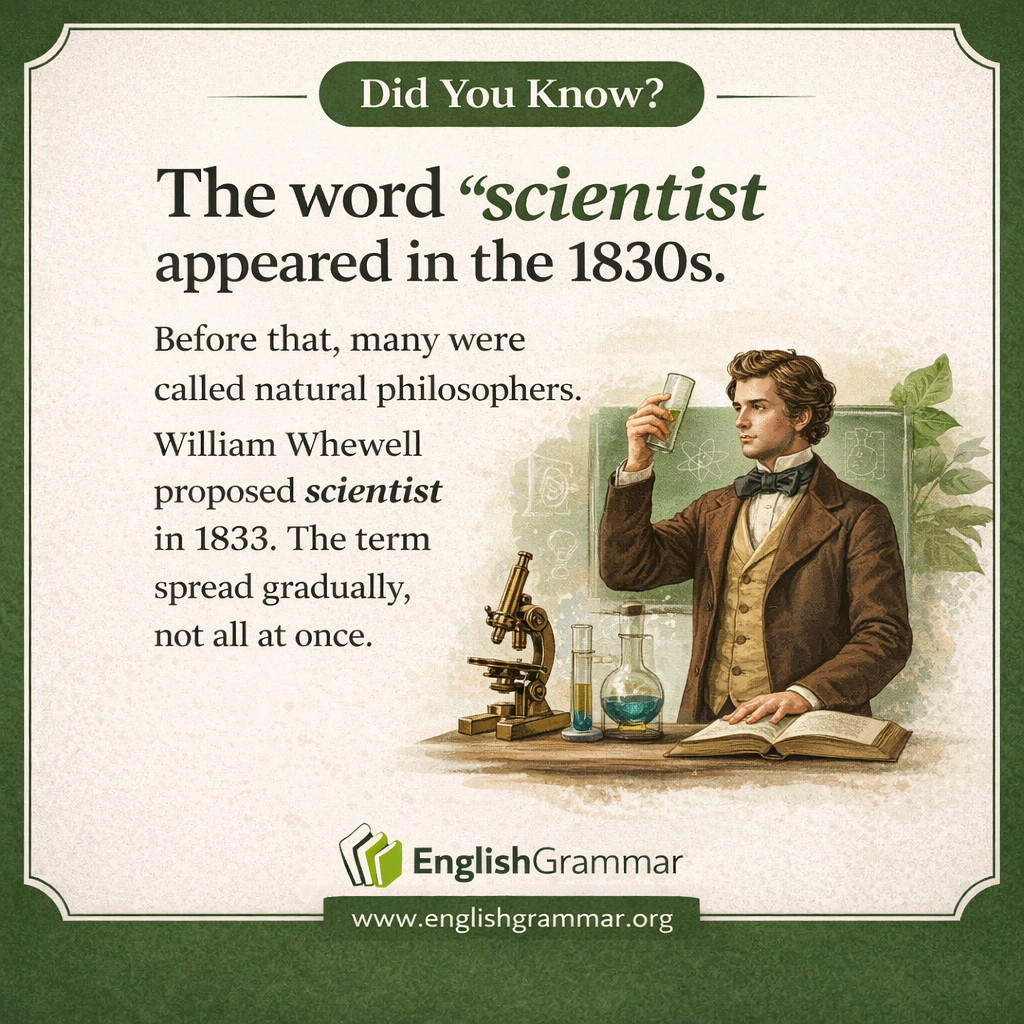
Scientist feels like an old, permanent word, but it is actually fairly modern. English speakers began using it in the 1830s, when the historian and philosopher William Whewell proposed it.
Before that, people who studied nature were often called natural philosophers. That label fit earlier traditions, when subjects like physics, chemistry, and biology were not always separated the way they are today.
Whewell suggested scientist in 1833 as a more suitable general term for people working across the sciences. An easy contrast is this:
- Earlier common term: natural philosopher
- Newer term: scientist
The change did not happen instantly. Many writers resisted the new word at first, and older labels continued for a while. Over time, though, scientist became the standard English term.
So if someone says the word has been around forever, the history is a little more surprising: the work is old, but the everyday label is much newer.
