
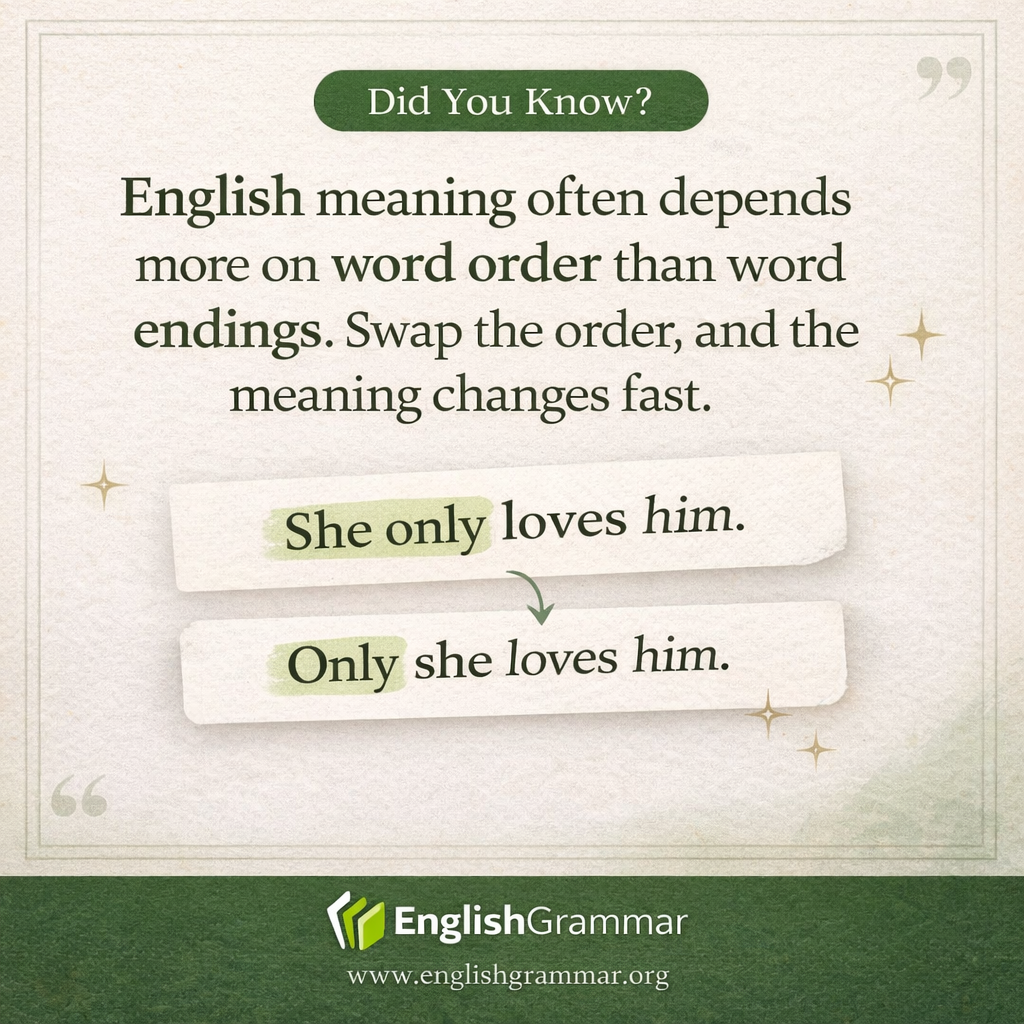
English is less dependent on word endings than many other languages. In older forms of English, endings helped show the job of each word in a sentence. Over time, many of those endings became weaker or disappeared, so word order became more important.
Today, English usually follows a clear pattern: subject, verb, object. This order helps listeners and readers understand who is doing the action and who is receiving it.
For example, The dog chased the cat does not mean the same thing as The cat chased the dog. The words are almost identical, but the order changes the meaning completely.
In some languages, endings on nouns make the roles clearer, so word order can be more flexible. English still has a few endings, such as he and him, but they are limited. Because of that, position does much of the grammatical work.
- She loves him is clear because of both order and pronouns.
- Him loves she sounds wrong in standard English because the usual pattern is broken.
This is one reason English learners often need to focus on sentence order early. In English, placement is not just style, it is grammar.
