
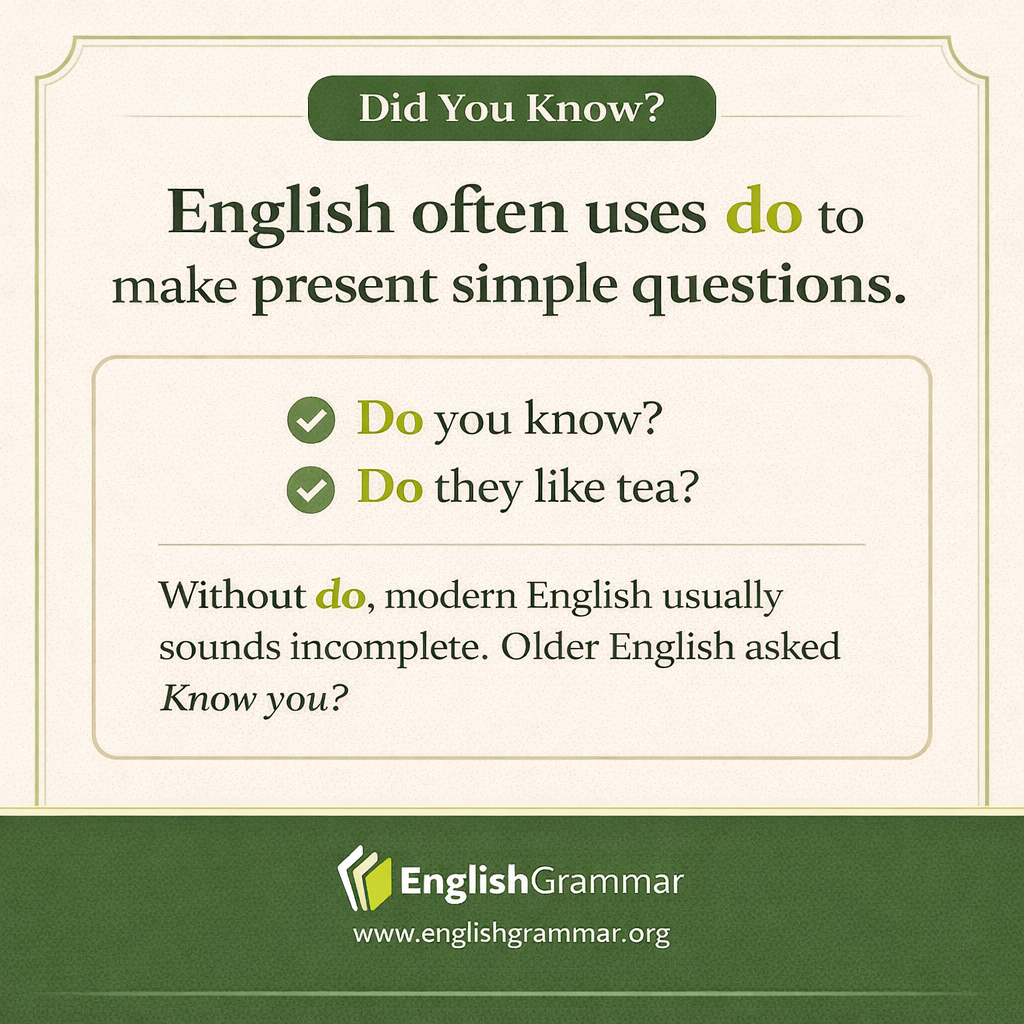
Modern English usually uses do to form questions in the present simple when there is no other helping verb. That is why we say Do you know? and Do they like tea? instead of simply Know you? or Like they tea?
This extra do is called do support. It appears when English needs a helper to build a question or negative sentence.
- Questions: Do you understand?
- Negatives: I do not agree.
- Emphasis: I do want to help.
Older English did not always need this pattern. Earlier stages of the language could form questions by changing word order alone, so forms like Know you? were possible. Over time, English moved toward using do as the regular helper in these cases.
There is one important limit. If the sentence already has another auxiliary or the verb be, English does not add do. We say Are you ready? and Can you swim?, not Do are you ready? or Do can you swim?
So in Do you know?, the word do is not carrying the main meaning. It is doing a grammar job, helping English build the question in the standard modern way.
