
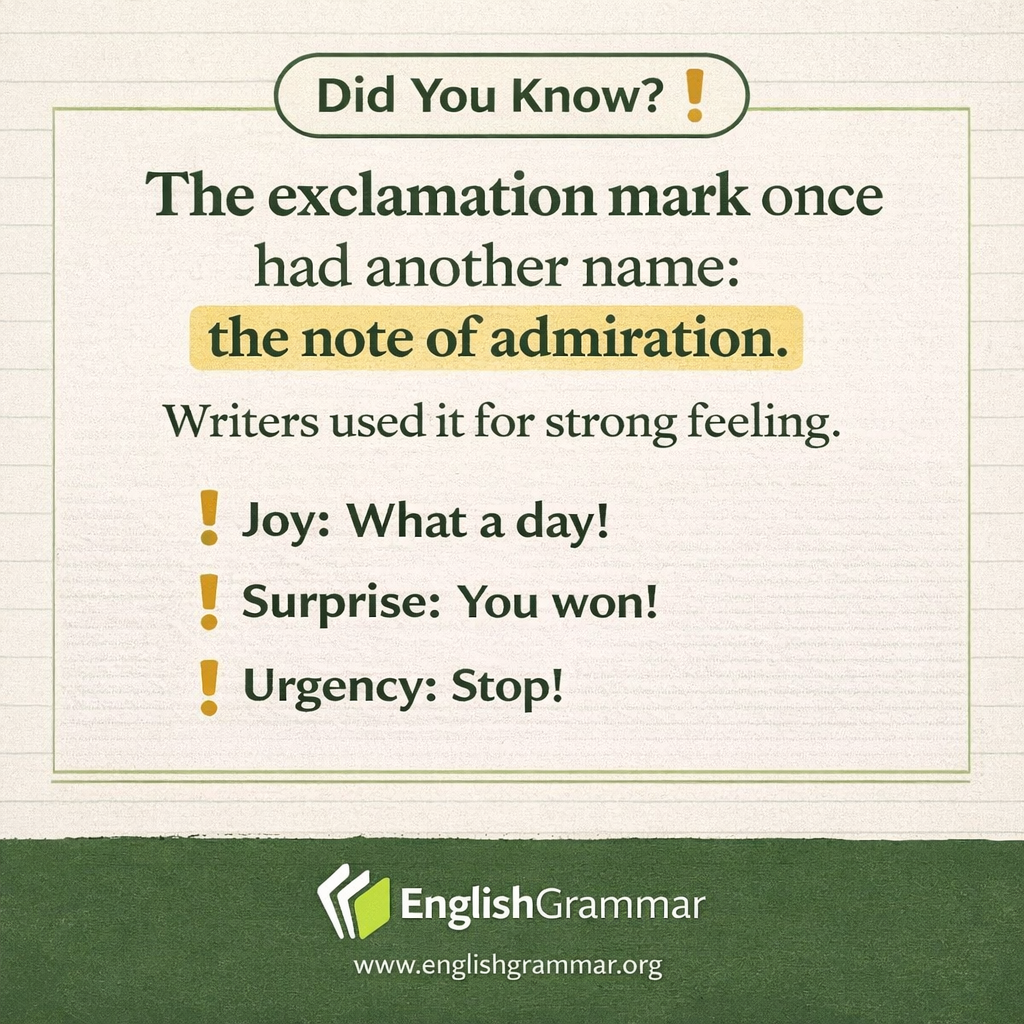
The exclamation mark once had an older name: the note of admiration. That term appeared in earlier English writing and grammar discussions. The name highlights the mark’s main job, to show strong feeling.
Today, we usually call it an exclamation mark, but the older name helps explain why writers use it. It can signal excitement, surprise, alarm, or forceful command.
- Excitement: What a beautiful view!
- Surprise: You won!
- Command or warning: Stop!
The older term is not common in modern everyday English, but you may still see it in discussions of punctuation history. It is a useful reminder that punctuation does more than organize sentences. It also helps express tone and emotion.
In careful writing, one exclamation mark is usually enough. Used well, it adds emphasis. Used too often, it can lose its effect.