
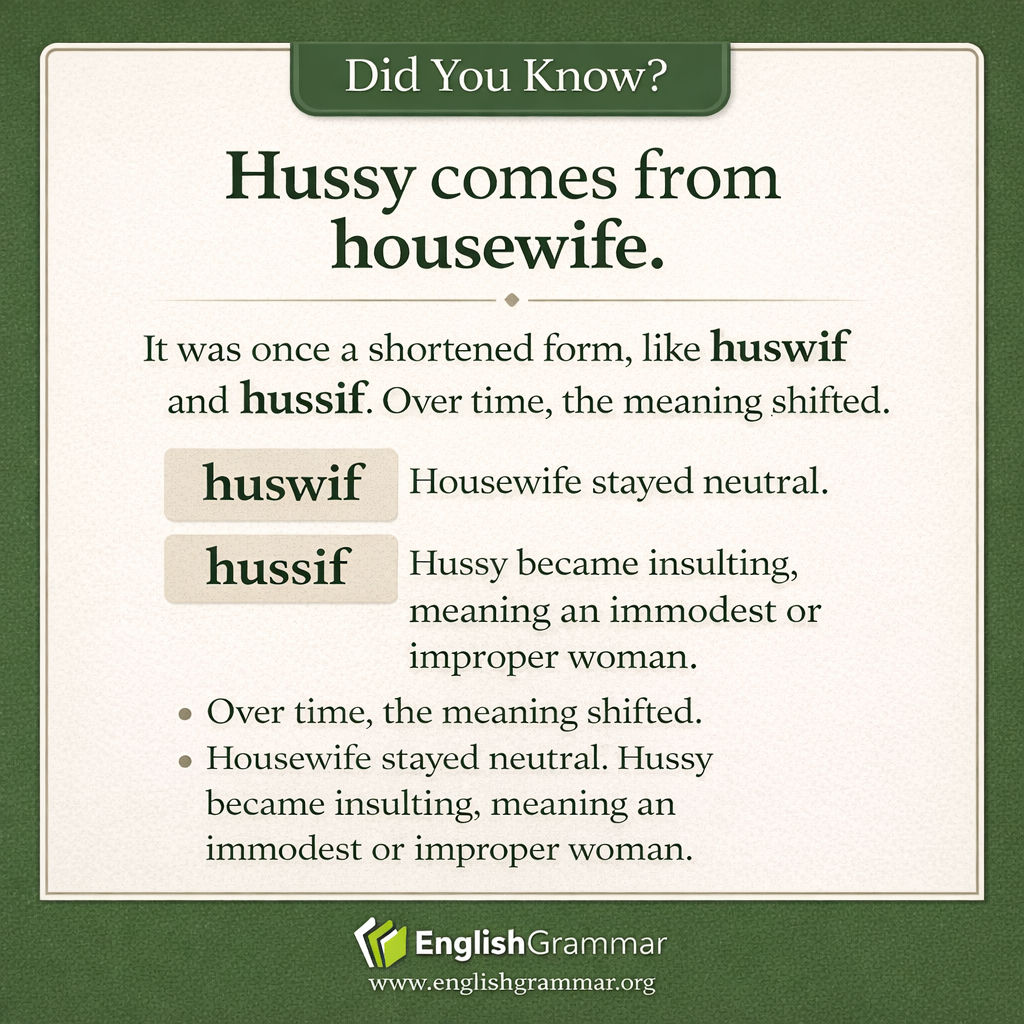
Hussy originally comes from housewife. In earlier English, housewife could appear in shortened spoken forms such as huswif and hussif. Those forms reflected everyday pronunciation, not an insult.
Over time, the words split in meaning. Housewife remained the ordinary, neutral term for a married woman managing a household. Hussy, however, developed a negative sense and came to mean a woman seen as improper, bold, or sexually immodest.
This kind of change is a useful reminder that word history and modern meaning are not always the same. A word can begin as a simple variant, then take on a very different tone later.
- Earlier sense: forms related to housewife were ordinary household words.
- Later sense: hussy became an insult.
- Contrast: housewife stayed neutral, but hussy did not.
So the surprise is not the form itself, but the semantic shift. The sound changed a little, and the meaning changed a lot.
