
• Skip to primary navigation
  • Skip to main content
  • Skip to primary sidebar
Home of English Grammar
  • Home
  • Course
  • Exercises
  • Grammar Rules
  • Matches
  • Posts
  • Tools
    • Grammar Checker
    • Very Replacer
    • Word Counter
  • Vocabulary Lists
  • Archives
    • Social Media Posts
    • Writing Guides
  • Sign in
  • Join free

What “keep your ear to the ground” means, and where it likely came from

June 4, 2026

The origin of "keep your ear to the ground"

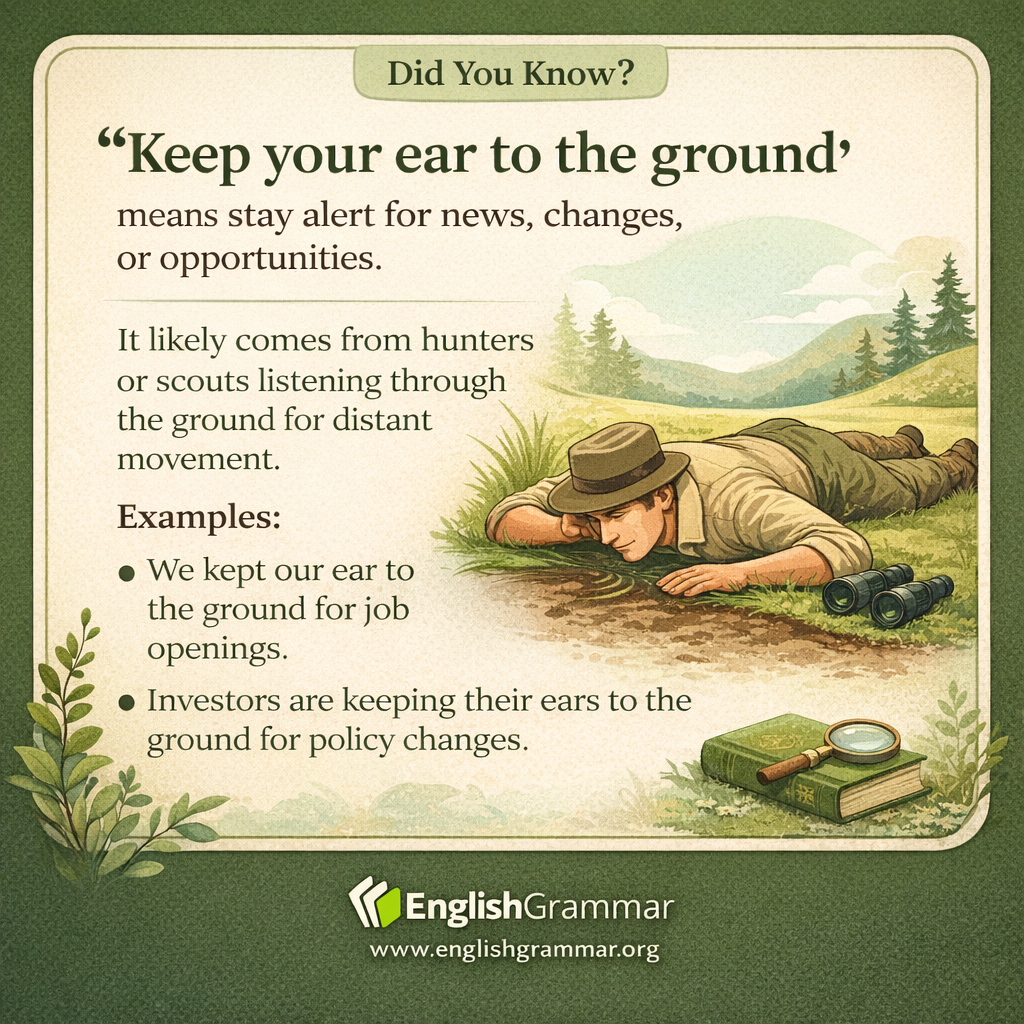
Keep your ear to the ground means to stay alert for new information, early signs of change, or possible opportunities. People use it when they want to notice something before everyone else does.

The phrase likely comes from a physical image. Hunters, scouts, and travelers were said to listen through the ground for distant movement, such as approaching people or animals. Even if the history is not perfectly certain, that image explains the modern meaning well: listen carefully for signals that are still faint.

Today, the idiom is common in work, business, and everyday life. It usually suggests paying close attention to rumors, trends, or small clues.

  • We kept our ear to the ground for job openings after graduation.
  • Local reporters keep their ears to the ground during election season.
  • If you keep your ear to the ground, you may hear about the changes before the official announcement.

You can also notice the number change. People often say keep your ear to the ground to one person, but keep your ears to the ground can appear in general statements. Both are understandable, though the singular form is the best known.

Improve your English grammar, vocabulary and writing

We take you step by step from beginner to advanced, even if you struggled with English at school or have always had trouble remembering the rules.

  • 10 modules, 112 lessons and 730 questions
  • Just log in and learn anytime and anywhere
  • Your progress is saved in your account
  • Download the 2027 Grammar Guide (PDF)
Join free

Already have an account? Sign in

See what’s in the course

Primary Sidebar

2.4M760.9K165.9K

Free 2027 Grammar Guide

  • Download Grammar Guide (PDF)
  • Online grammar course, A1 to C2
  • Weekly exercises and vocabulary
  • Join over 3 million English learners

We respect your privacy. Unsubscribe anytime.

Already have an account? Sign in

Grammar Checker - Try Now

Latest Posts

  • 100 Best Synonyms for “Holistic” October 31, 2026
  • 100 Best Synonyms for “Remarking” October 31, 2026
  • 100 Best Synonyms for “Tyrannical” October 31, 2026
  • 100 Best Synonyms for “Defensive” October 31, 2026
  • Why “nightmare” has nothing to do with horses October 31, 2026
  • 100 Best Synonyms for “Hinder” October 31, 2026
  • 100 Best Synonyms for “Trying” October 31, 2026
  • Autonomous vs. independent: control, decisions, and support October 31, 2026
  • 100 Best Synonyms for “Defective” October 31, 2026
  • 100 Best Synonyms for “Highlighting” October 31, 2026
Home of English Grammar

Free English grammar exercises, rules and vocabulary lists, with new exercises every week. Join the leading English grammar site with over 3 million followers.

Join free

Learn

  • Exercises
  • Matches
  • Grammar rules
  • Vocabulary lists
  • Writing guides
  • Online tools

More

  • Top social media posts
  • Various posts
  • Contact

Account

  • Join free
  • Grammar Course
  • Free grammar guide (PDF)

Copyright © 2026 EnglishGrammar.org

  • Disclaimer
  • Privacy policy
  • Terms
  • Sitemap