
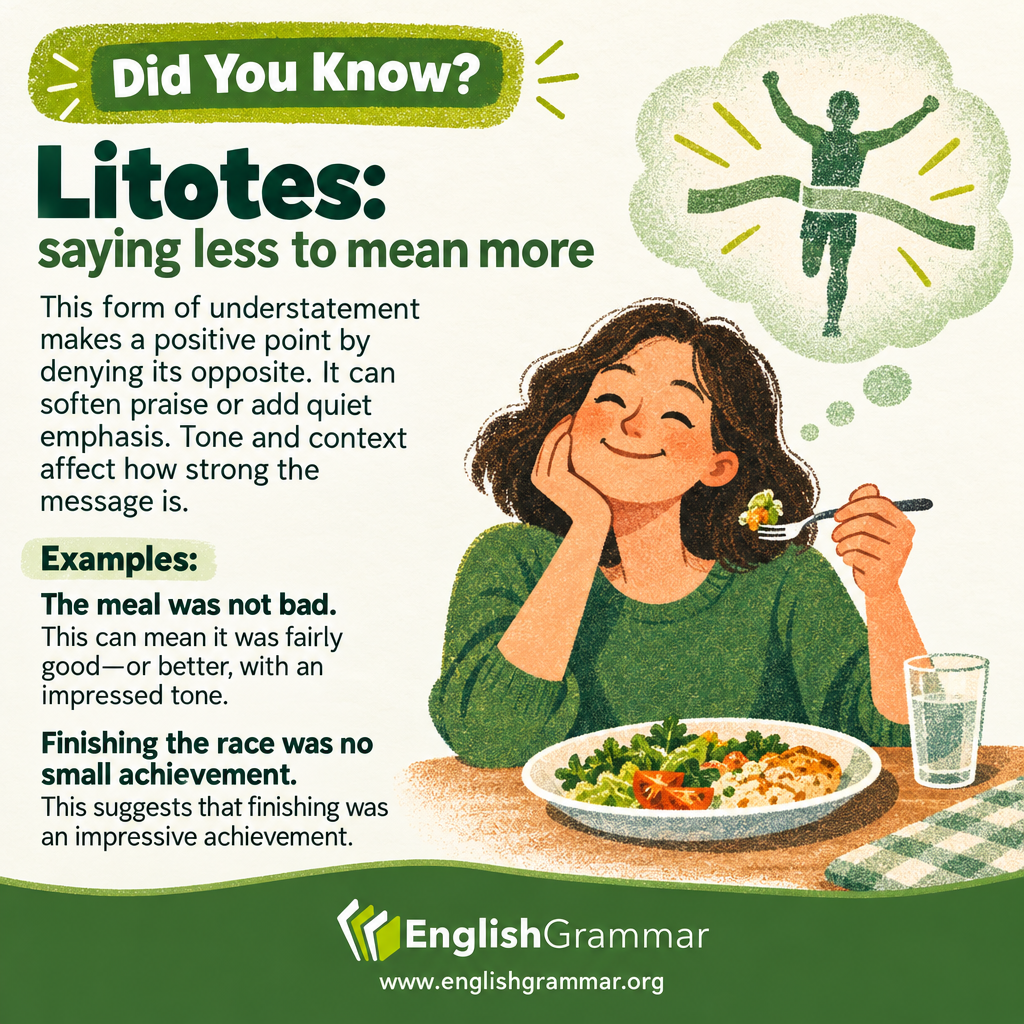
A negative expression can carry a positive message. If someone describes your cooking as not bad, they may mean that it is quite good. This kind of understatement is called litotes: making a point by denying its opposite.
The basic pattern is to reject a negative description rather than state the positive one directly. Instead of calling something easy, for example, a speaker might say it is not difficult. The effect depends on the situation and the speaker’s tone.
Common uses include:
- Softened praise: “Your first attempt was not bad.” This can suggest approval without sounding very enthusiastic.
- Modesty: “I’m not unfamiliar with the subject.” The speaker suggests some knowledge while avoiding a direct claim of expertise.
- Emphasis through understatement: “Organising the whole event was no small task.” Denying that the task was small highlights how demanding it was.
These expressions do not always have exactly the same strength as their positive alternatives. Not bad can mean acceptable, fairly good, or even excellent when said with an impressed tone. Context helps the listener judge how much praise is intended.
Not every negative sentence is litotes. “The shop is not open” normally reports a fact; it does not suggest praise or create understatement. Look for a negative expression used to communicate an understated positive point, rather than assuming that every use of not has this effect.