
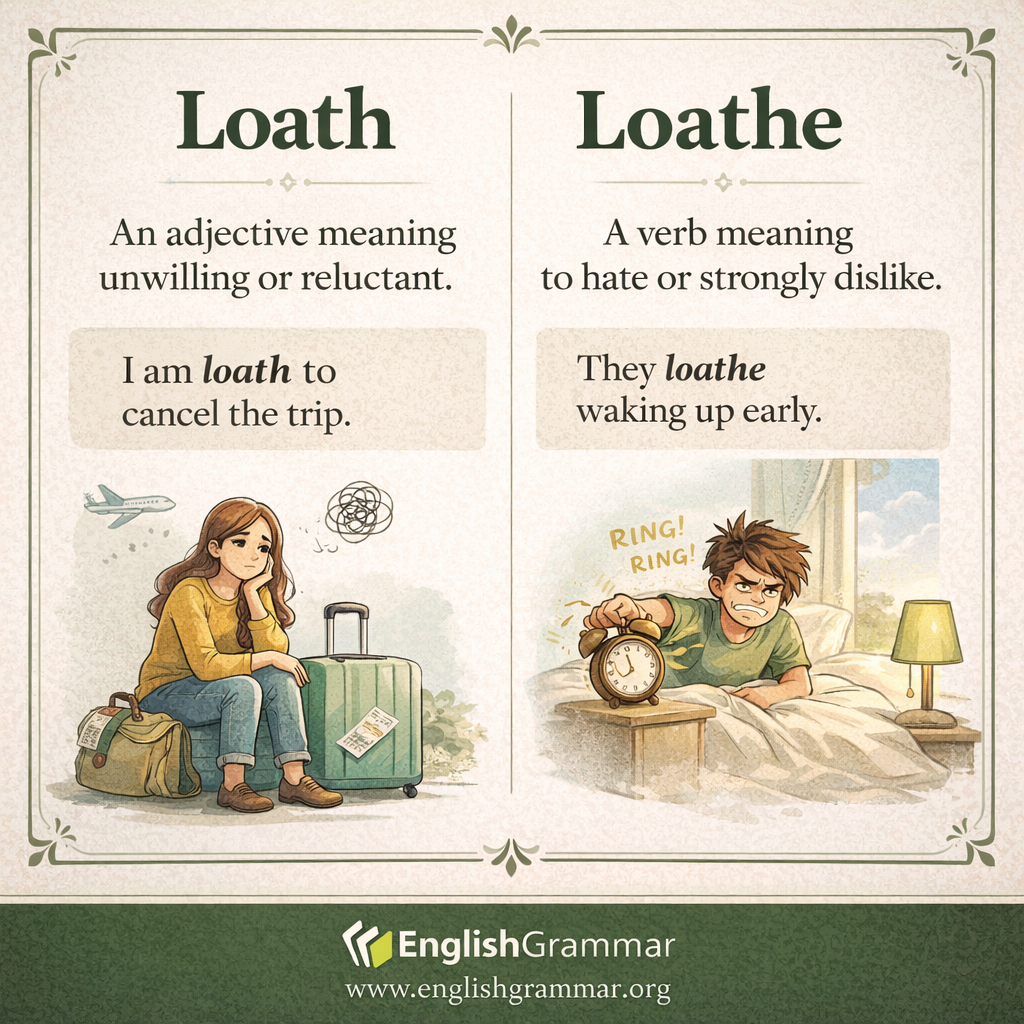
Loath and loathe look almost identical, but they do different jobs in a sentence.
Loath is an adjective. It means reluctant or unwilling. It often follows a form of the verb be. For example: I am loath to interrupt. In that sentence, the word describes a feeling of hesitation.
Loathe is a verb. It means to hate or to strongly dislike. For example: Some people loathe dishonesty. Here, the word shows an action or attitude.
- Use loath when you mean unwilling: She was loath to admit the mistake.
- Use loathe when you mean hate: He loathes cold coffee.
A helpful memory trick is this: loathe has an extra e, and it is the verb. If you can replace the word with reluctant, choose loath. If you can replace it with hate, choose loathe.