
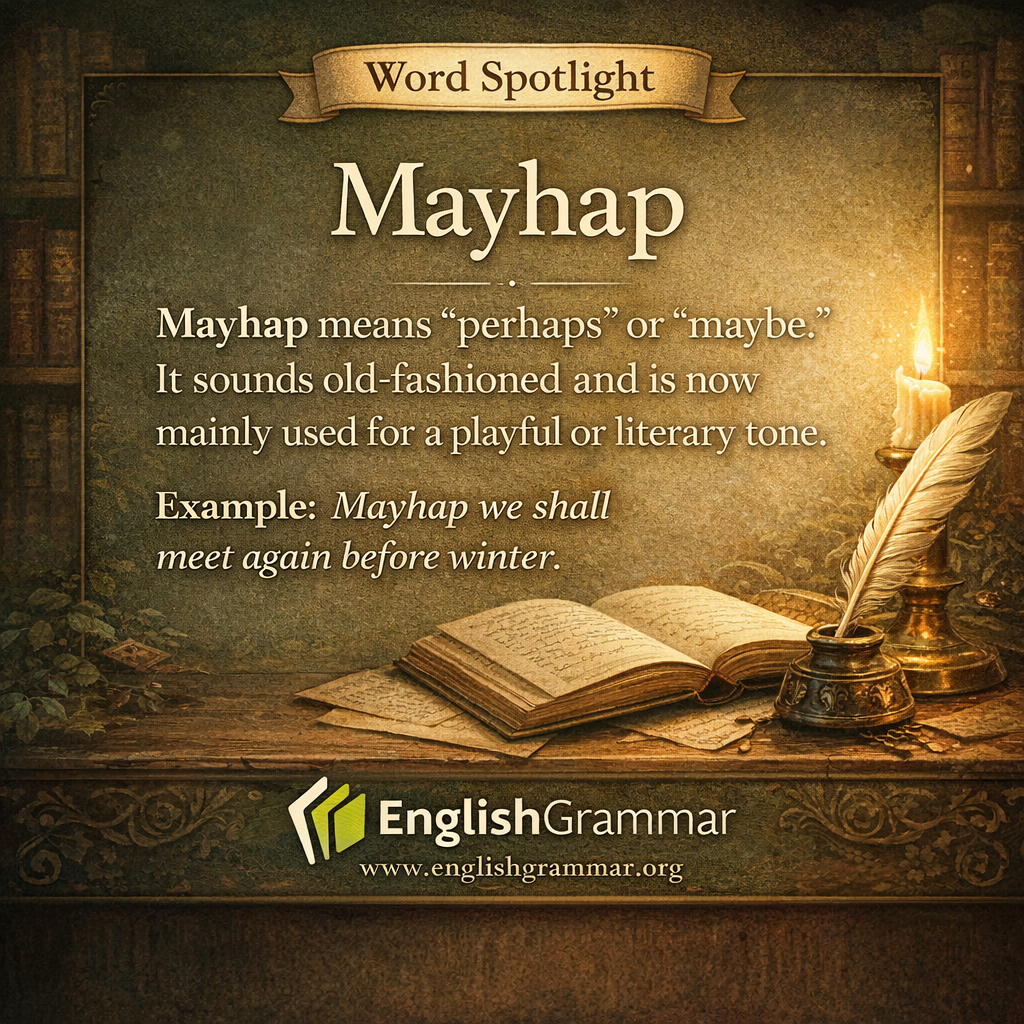
Mayhap means perhaps or maybe. It expresses uncertainty: something is possible, but the speaker does not know whether it will happen or be true.
In present-day English, mayhap sounds old-fashioned. You may encounter it in historical fiction, fantasy stories, or dialogue written to suggest an earlier time. Writers and speakers also sometimes use it playfully, especially when they want an ordinary thought to sound grand or theatrical.
For example:
- Mayhap we shall meet again before winter.
Here, the speaker thinks another meeting is possible. The words mayhap and shall give the sentence a literary, old-fashioned tone. In an everyday conversation, most people would say, “Maybe we’ll meet again before winter” or “Perhaps we’ll meet again before winter.”
Mayhap often appears at the beginning of a sentence, as in the example. It can also appear later—“We shall, mayhap, meet again”—but that position sounds even more stylized.
Use mayhap when an old-fashioned, humorous, or literary voice suits the situation. For routine messages, work emails, and ordinary conversation, maybe or perhaps will usually sound more natural. The three words communicate a similar idea, but their tone is different: maybe is common and conversational, perhaps is slightly more formal, and mayhap is deliberately old-fashioned.