
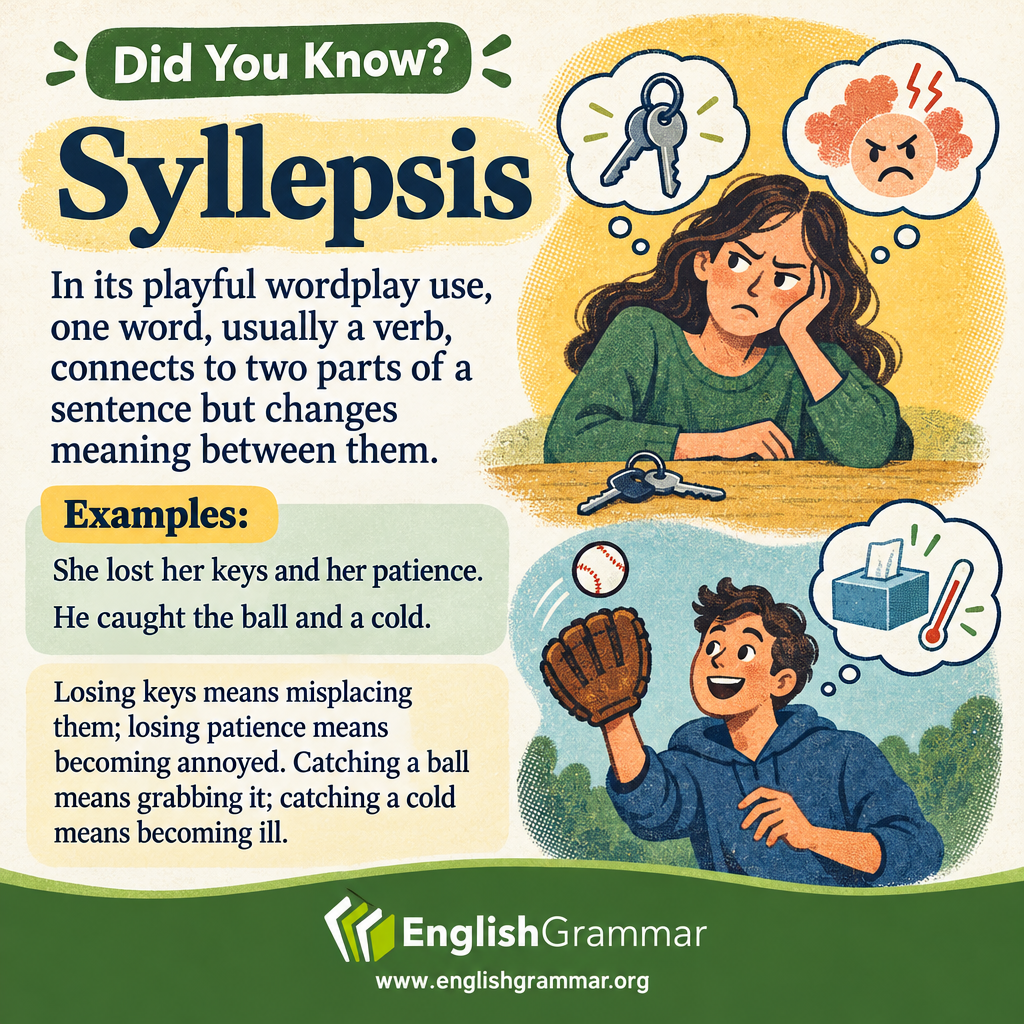
One word can do two jobs in the same sentence—and the difference can make you smile. In the playful rhetorical use of syllepsis, a word, usually a verb, connects to two parts of a sentence but carries a different meaning with each.
The shared word often moves between a literal meaning, describing something directly, and a figurative meaning, expressing an idea through an image or comparison.
- She broke his phone and his heart. Breaking the phone means damaging an object. Breaking his heart means causing deep emotional pain.
- She opened her front door and her heart to the stray dog. Opening the door is a physical action. Opening her heart means becoming loving or welcoming.
In both examples, the verb appears only once, but the reader understands it in two ways. That shift creates the surprise. Depending on the subject, the effect can be funny, warm, or sharp.
Simply sharing a verb is not enough. In She packed her shoes and her jacket, packed keeps the same meaning for both objects, so there is no comparable twist.
You may also see this device called zeugma. The terms overlap, and reference works do not all draw the boundary in the same place. When reading, focus on what the shared word means with each part of the sentence rather than treating the labels as a strict universal distinction.