
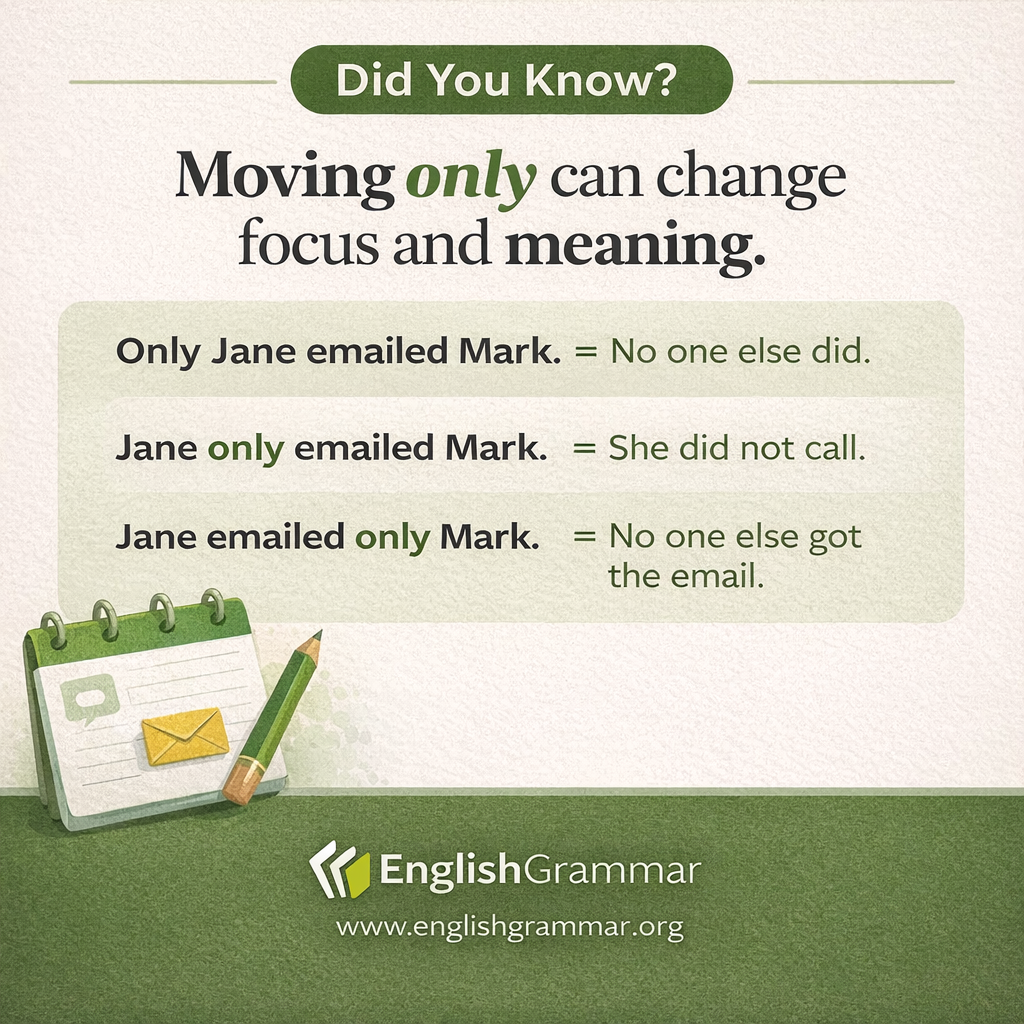
The word only is a focus word. Its position can change what part of the sentence feels limited, so moving it can change the meaning.
Compare these examples:
- Only Jane emailed Mark. This means Jane was the one who emailed him, and no one else did.
- Jane only emailed Mark. This means emailing was the only action. She did not call, text, or visit.
- Jane emailed only Mark. This means Mark was the only person who received the email.
In everyday speech, people do not always place only exactly where formal grammar expects it. Sometimes context makes the meaning clear anyway. Still, careful placement helps readers understand your sentence quickly.
A good habit is to put only as close as possible to the word or idea you want to limit. If you mean no one else, place it near the subject. If you mean no other action, place it near the verb. If you mean no other person or thing, place it near that object.
Small changes in word order can create big changes in meaning, and only is one of the clearest examples.