
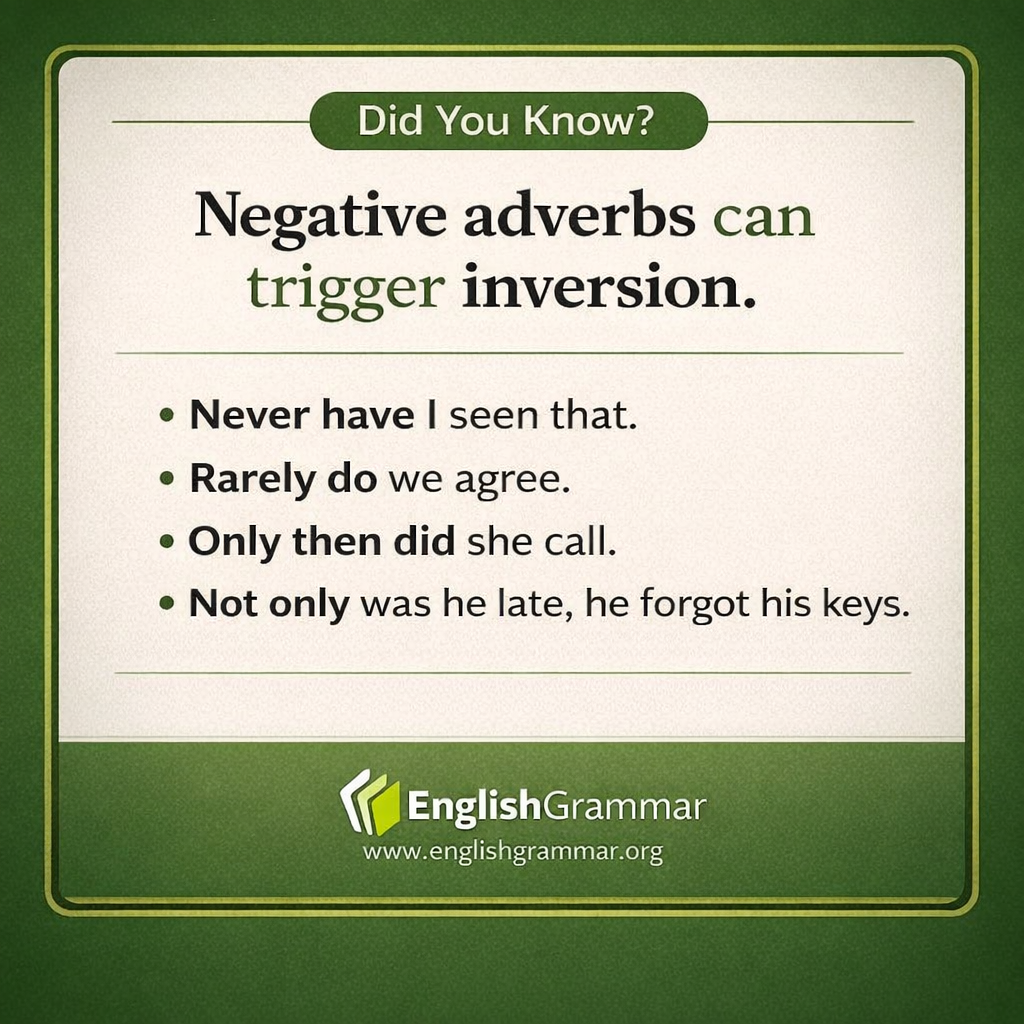
Some adverbs and adverb phrases can change normal English word order. After negative or limiting expressions, English often uses inversion, which means the auxiliary verb comes before the subject.
Compare the usual order with the inverted order:
- Normal: I have never seen that.
- Inverted: Never have I seen that.
This pattern is common after words and phrases such as never, rarely, seldom, hardly, scarcely, only then, and not only.
- Rarely do we agree.
- Only then did she call.
- Not only was he late, he forgot his keys.
If there is no auxiliary verb in the normal sentence, English usually adds do, does, or did. For example, we say Rarely do they visit, not Rarely they visit.
This structure is more common in formal writing, careful speech, and emphasis. It is useful when you want a sentence to sound stronger, more literary, or more precise.
