
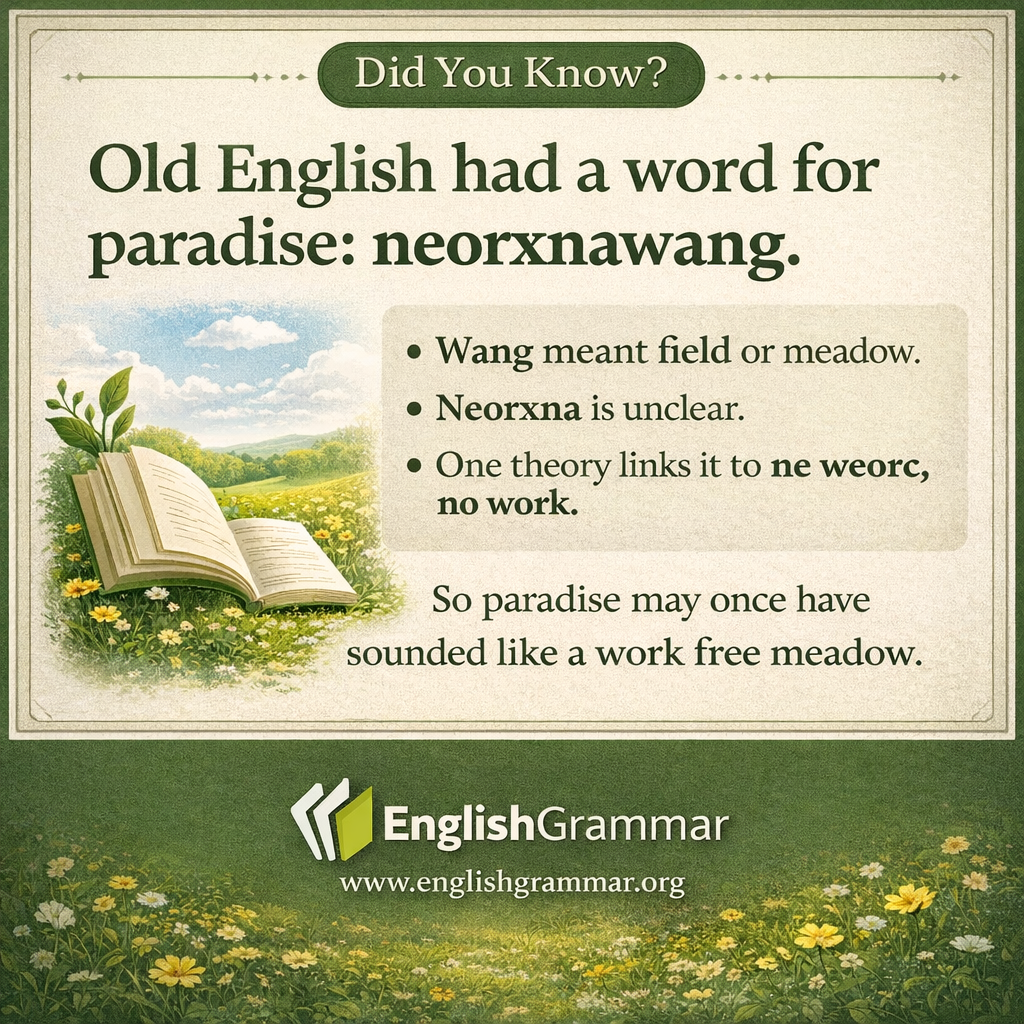
Old English had a striking word for paradise: neorxnawang. The second part, wang, meant a field, plain, or meadow. That makes the image behind the word feel very earthy and visible, not abstract.
The first part, neorxna, is much less certain. Its origin is unknown, which is one reason the word attracts so much attention. One suggested explanation connects it with ne weorc, meaning no work. If that idea is right, the whole word could suggest something like a meadow where there is no labor.
That etymology is a theory, not a settled fact, so it is best presented carefully. Still, it shows how older words often preserve vivid pictures that later speakers no longer notice.
- wang: field, meadow
- ne weorc: no work, according to one theory
- neorxnawang: paradise
Even if the first element remains uncertain, neorxnawang offers a memorable glimpse into how Old English could describe paradise as a green, open place.