
• Skip to primary navigation
  • Skip to main content
  • Skip to primary sidebar
Home of English Grammar
  • Home
  • Course
  • Exercises
  • Grammar Rules
  • Matches
  • Posts
  • Tools
    • Grammar Checker
    • Very Replacer
    • Word Counter
  • Vocabulary Lists
  • Archives
    • Social Media Posts
    • Writing Guides
  • Sign in
  • Join free

Why “no offense” often sounds like a warning

November 11, 2026

Why "no offense" usually prepares you for offense

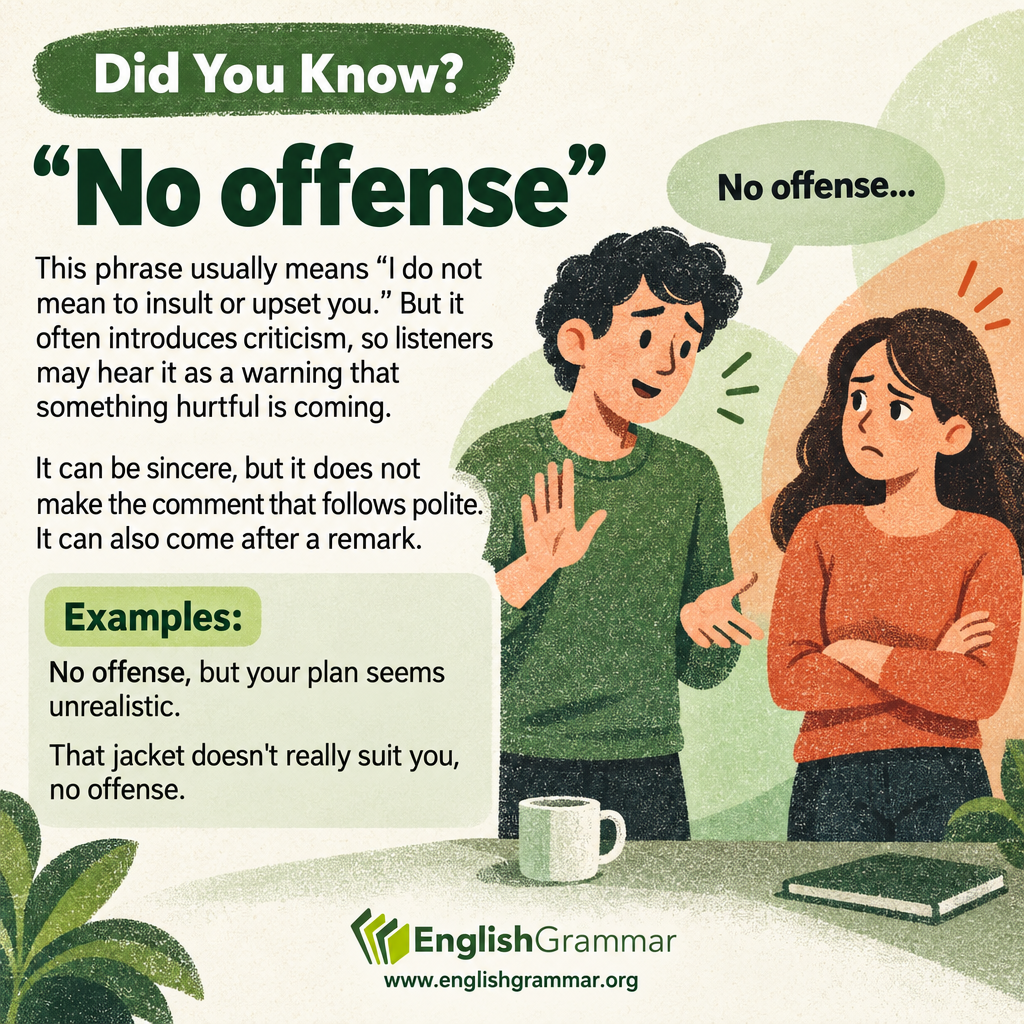
“No offense” usually means “I do not mean to insult or upset you.” People often use it before criticism, a disagreement, or a personal comment. It can also come after the remark.

The intention may be friendly, but the effect can be different. By saying that they do not want to offend, speakers show that they recognize a risk: their next words might hurt. The listener may therefore hear a warning rather than reassurance.

  • “No offense, but your presentation was hard to follow.” The speaker introduces criticism while claiming not to intend harm.
  • “I would rather ask someone with more experience, no offense.” The phrase comes afterward, but the listener may still feel that their ability has been questioned.

Is it always rude? No. It can be a sincere attempt to soften an awkward comment. Friends may also use it playfully. Tone, the relationship, and the actual words all matter. However, announcing a harmless intention does not make a hurtful remark harmless.

What works better for feedback? Focus on a specific problem and, when possible, offer a useful suggestion. For example: “I lost track of the main point in the middle. Could you add a short summary?” This tells the speaker what needs attention without making a broad judgment about their ability.

Improve your English grammar, vocabulary and writing

We take you step by step from beginner to advanced, even if you struggled with English at school or have always had trouble remembering the rules.

  • 11 modules, 124 lessons and 819 questions
  • Just log in and learn anytime and anywhere
  • Your progress is saved in your account
  • Download the 2027 Grammar Guide (PDF)
Join free

Already have an account? Sign in

See what’s in the course

Primary sidebar

2.4M760.9K165.9K

Free 2027 Grammar Guide

  • Download Grammar Guide (PDF)
  • Online grammar course, A1 to C2
  • Weekly exercises and vocabulary
  • Join over 3 million English learners

We respect your privacy. Unsubscribe anytime.

Already have an account? Sign in

Grammar Checker - Try Now

Matches rankings

    No results yet. Be the first to finish today’s Daily.

      No results yet. Be the first to finish today’s Daily.

        No results yet. Be the first to finish today’s Daily.

          No results yet. Be the first to finish today’s Daily.

          Play Matches

          Latest posts

          • Why “no offense” often sounds like a warning November 11, 2026
          • 100 Best Synonyms for “Love to” November 11, 2026
          • 100 Best Synonyms for “Pivotal” November 11, 2026
          • Salutary vs. salubrious: benefits, lessons, and health November 11, 2026
          • 100 Best Synonyms for “Setbacks” November 11, 2026
          • Reported Speech Exercise November 11, 2026
          • 100 Best Synonyms for “Sweeping” November 11, 2026
          • 100 Best Synonyms for “Patience” November 11, 2026
          • 100 Best Synonyms for “Isolation” November 11, 2026
          • Agreeing and Disagreeing in Discussions Exercise November 11, 2026
          Home of English Grammar

          Free exercises, a step-by-step grammar course, rules and vocabulary lists, with new exercises every week. Join the leading English grammar site with over 3 million followers.

          Join free

          Learn

          • Exercises
          • Grammar course
          • Level test
          • Matches
          • Grammar rules
          • Vocabulary lists
          • Writing guides
          • Online tools

          More

          • Top social media posts
          • Various posts
          • Contact

          Account

          • Join free
          • Free grammar guide (PDF)

          Copyright © 2026 EnglishGrammar.org

          • Disclaimer
          • Privacy policy
          • Terms
          • Sitemap