
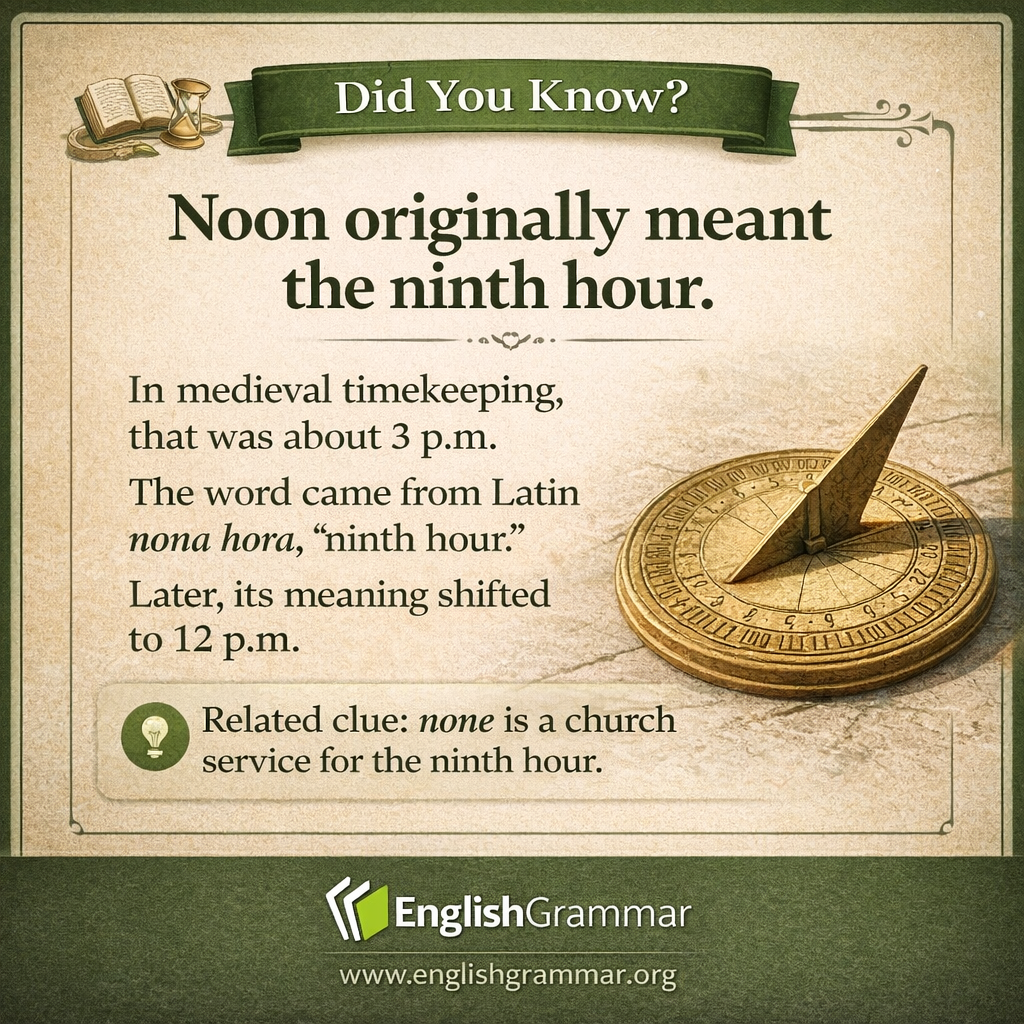
Noon did not originally mean midday. It comes from the Latin phrase nona hora, meaning the ninth hour. In the Roman system, daylight was often counted from about 6 a.m., so the ninth hour was around 3 p.m., not 12 p.m.
Over time, the meaning changed. In English, noon gradually moved earlier in the day until it came to mean midday, or 12 p.m. Language change like this is common. A word can keep its form while its meaning shifts.
You can still see the older sense in a related word: none. In Christian liturgy, none is the prayer service for the ninth hour. That preserves the original time connection even though everyday noon now means something different.
- Original sense: the ninth hour, about 3 p.m.
- Modern sense: midday, 12 p.m.
- Related clue: none, the church office of the ninth hour
So when we say noon today, we mean the middle of the day, but the word itself began much later in the afternoon.
