Home of English Grammar

Grammar Guide
  • Home
  • Exercises
  • Matches
  • Rules
  • Tools
    • Grammar Checker
    • Very Replacer
    • Word Counter
  • Top Social Media Posts
  • Various Posts
  • Vocabulary
  • Writing Guides
  • Go Pro

The origin of “bite the bullet” is less certain than many people think

May 7, 2026 - pdf

The origin of "bite the bullet"

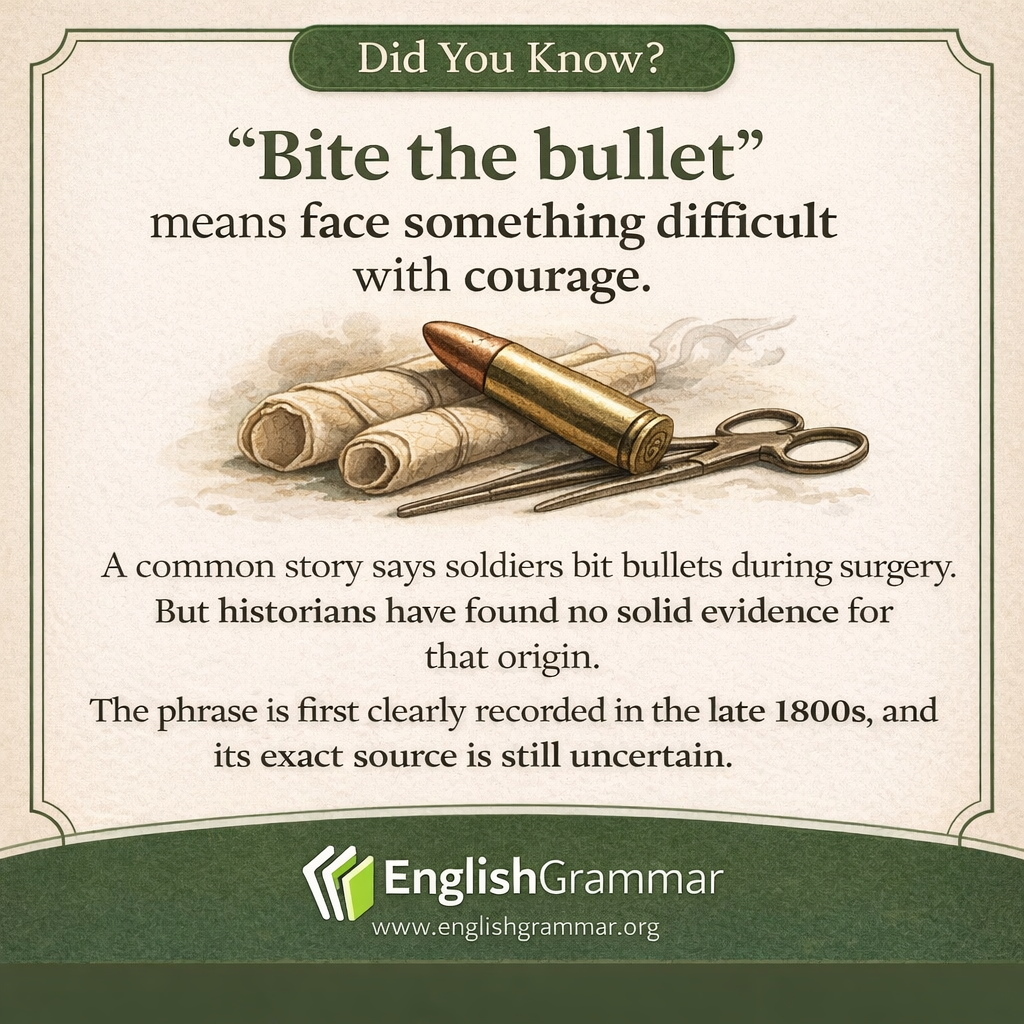
“Bite the bullet” means to accept something difficult, painful, or unpleasant with courage. Today, people use it for many kinds of hardship, not just physical pain. For example, someone might bite the bullet and pay an expensive repair bill, or finally start a task they have been avoiding.

A very common explanation says the phrase came from old battlefield surgery, when a patient supposedly bit on a bullet to endure pain. It is a memorable story, but historians have not found solid evidence that this is the true source of the expression. That makes the tale popular, but unproven.

The phrase is clearly recorded in English in the late 1800s. Because the documentary trail is limited, the exact origin remains uncertain. This is a good reminder that widely repeated word histories are not always as secure as they sound.

  • Meaning: face something hard with bravery.
  • Example: “I finally bit the bullet and went to the dentist.”
  • Key point: the meaning is clear, but the origin is still debated.
  • Share
  • Post
  • Post
  • Reddit
  • Email
  • WhatsApp
NEW: Try Matches, our daily vocabulary challenge. Pick a topic and level and match words with definitions to boost your vocabulary.
2,485,429 
761,532 
Improve Your Grammar
  • Download 2026 Grammar Guide (PDF)
  • Free Weekly Exercises & Vocabulary
  • Join over 3 Million English Learners
We respect your privacy. Unsubscribe anytime.

Grammar Checker

GrammarCheck.net - Try online
Hint → Bookmark GrammarCheck for future use.

Latest Posts

  • 100 Best Synonyms for “Impacting” September 17, 2026
  • 100 Best Synonyms for “Implication” September 17, 2026
  • 100 Best Synonyms for “Somber” September 17, 2026
  • Consecutive vs. subsequent: What’s the difference? September 17, 2026
  • 100 Best Synonyms for “Unwell” September 17, 2026
  • 100 Best Synonyms for “Fire” September 17, 2026
  • 100 Writing Rules Every Educated Adult Should Know September 17, 2026

Copyright © 2026 · EnglishGrammar.org
Contact · Disclaimer · Privacy Policy · Refund Policy · Sitemap · Terms

Improve Your Grammar
  • Download 2026 Grammar Guide (PDF)
  • Free Weekly Exercises & Vocabulary
  • Join over 3 Million English Learners
We respect your privacy. Unsubscribe anytime.