
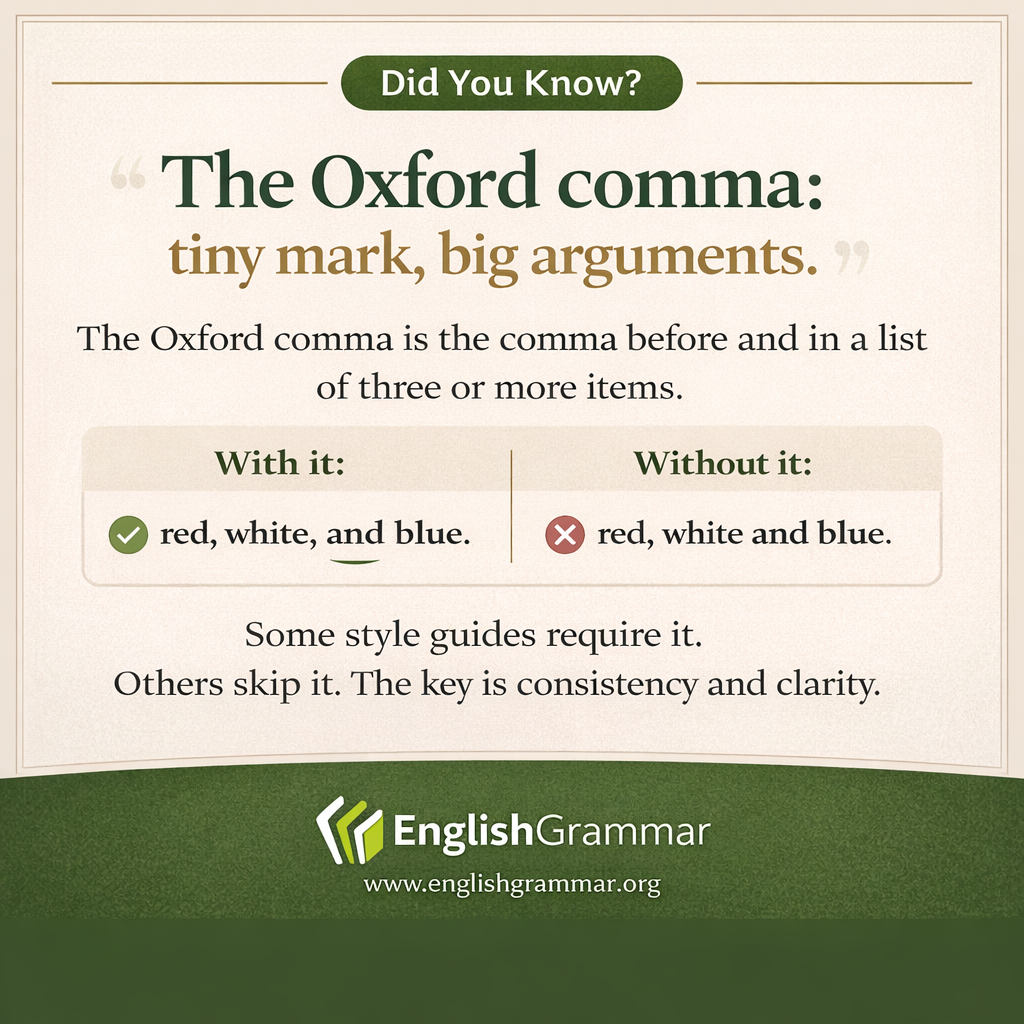
The Oxford comma, also called the serial comma, is the comma placed before and or or in a list of three or more items. In the sentence red, white, and blue, the comma before and is the Oxford comma.
Not every style guide treats it the same way. Some require it in all such lists, while others usually leave it out. That is why you may see both apples, pears, and peaches and apples, pears and peaches in published writing.
The strongest argument for using it is clarity. Sometimes the final comma helps prevent confusion. For example, compare these:
- I thanked my parents, Oprah, and Taylor Swift.
- I thanked my parents, Oprah and Taylor Swift.
The second version can sound as if Oprah and Taylor Swift are the writer’s parents. The Oxford comma helps separate the items clearly.
The best rule for most writers is simple: follow the style guide you are using, and be consistent. If no guide applies, choose the version you prefer, but make sure your sentence stays easy to read.