
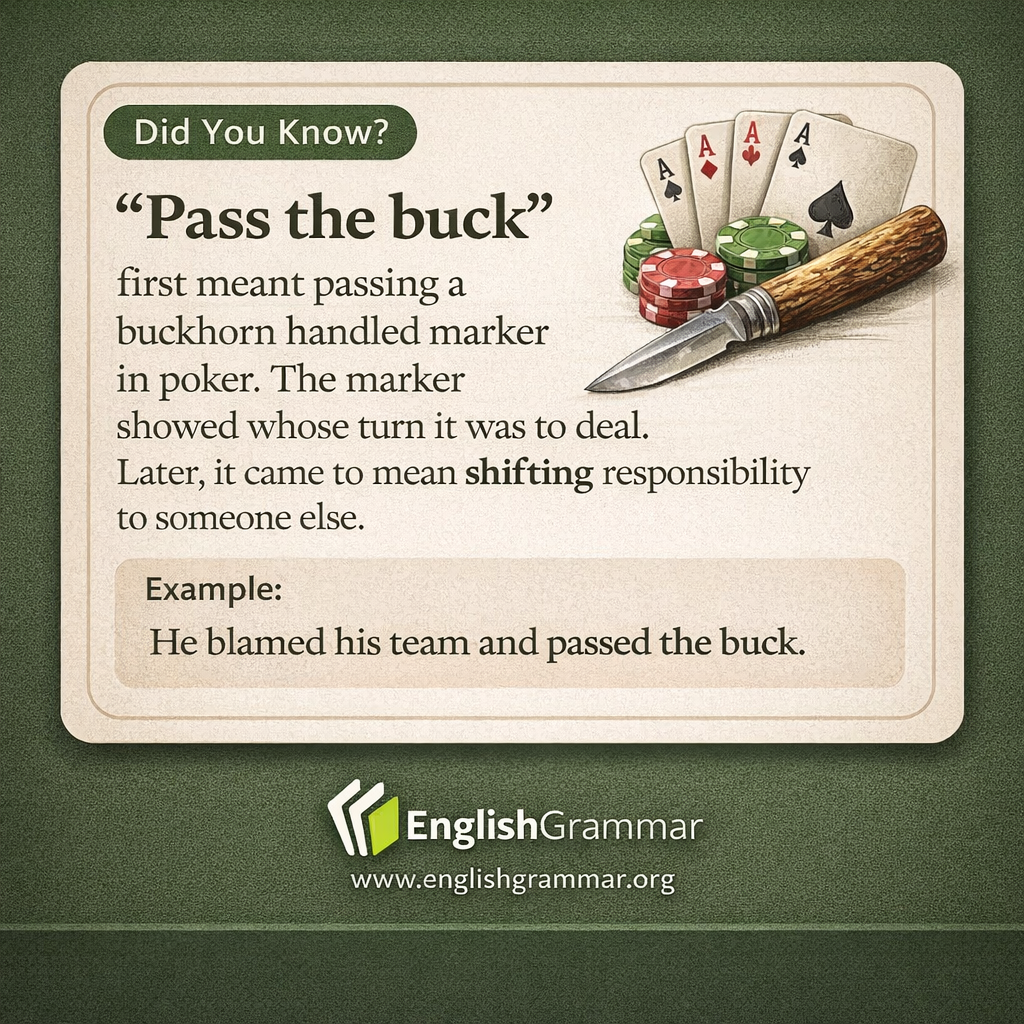
The phrase “pass the buck” did not begin with blame. It began in card games, especially poker. A buck was a marker, sometimes made from buckhorn, used to show which player had the responsibility of dealing next. If a player did not want to deal, the marker could be passed to the next person. That literal action gave us the phrase.
Over time, the meaning changed. In modern English, “pass the buck” usually means to shift responsibility to someone else instead of accepting it yourself.
- Original sense: passing the dealer marker in a card game.
- Modern sense: avoiding responsibility or blame.
For example, if a manager says a mistake was entirely the staff’s fault, even though the manager approved the plan, we might say the manager passed the buck.
A related expression is “the buck stops here”, which means responsibility will not be passed along any further. It became especially famous because U.S. President Harry S. Truman kept a sign with those words on his desk.
