
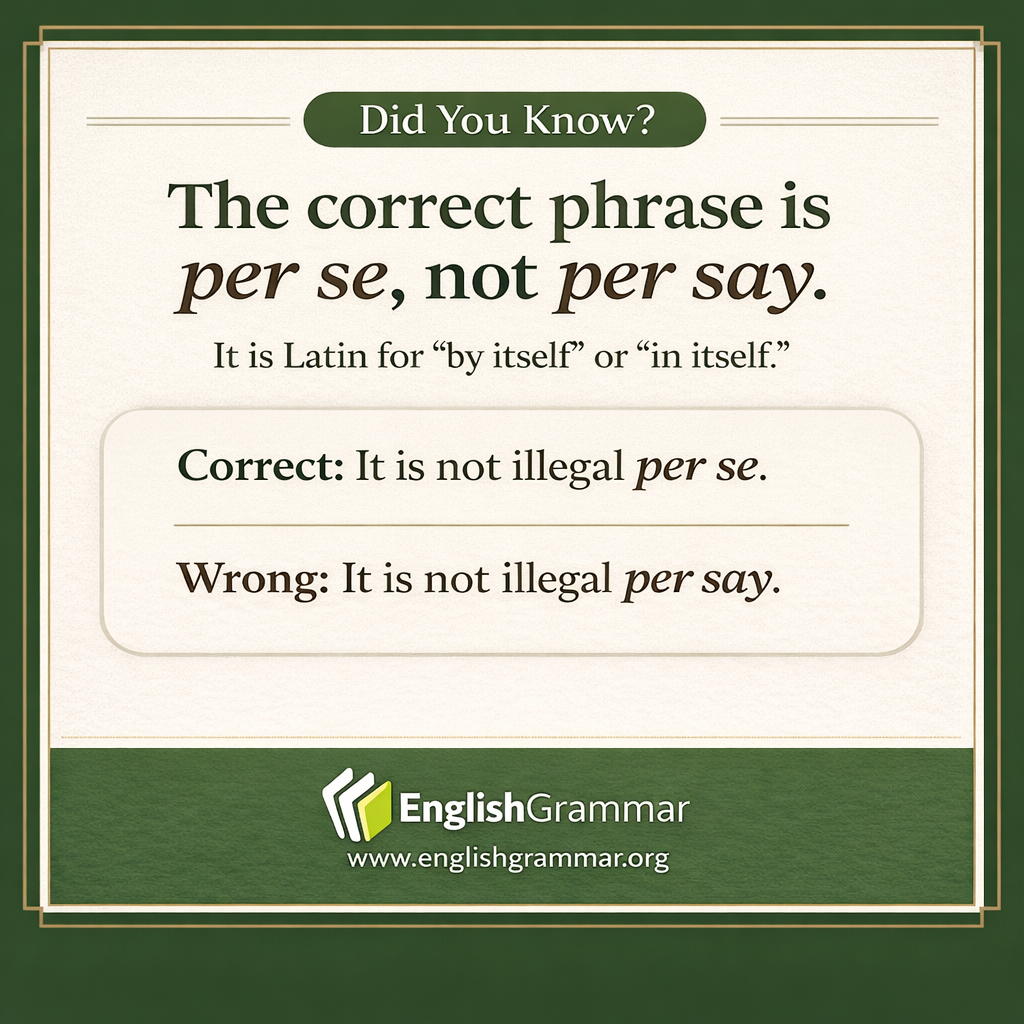
Per se is the correct phrase. Per say is a common misspelling based on how the phrase sounds when spoken.
Per se comes from Latin and means by itself or in itself. We use it when we want to talk about the nature of something alone, not its effects, context, or related details.
For example: “The rule is not unfair per se, but it can be applied unfairly.” This means the rule itself is not inherently unfair, even if people sometimes use it in an unfair way.
- Correct: “Working late is not bad per se.”
- Correct: “The idea is not wrong per se, but it needs better evidence.”
- Incorrect: “Working late is not bad per say.”
A simple memory tip is this: per se is a fixed phrase, so keep the original spelling. If you mean in itself, choose per se.
