
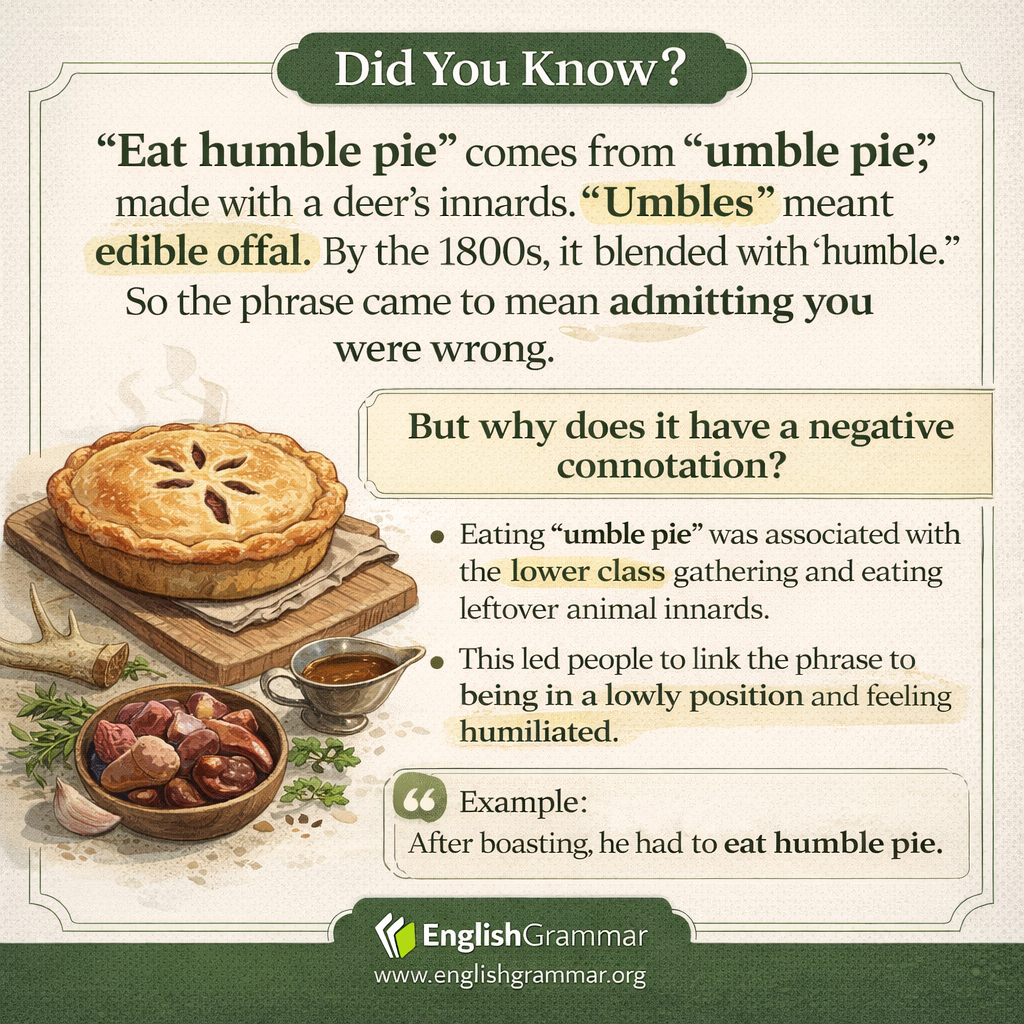
The phrase eat humble pie has a food history behind it. It is linked to umble pie, an old dish made from the umbles of a deer, meaning the heart, liver, and other edible inner parts. In Middle English and Anglo French, forms of the word referred to this kind of offal.
Over time, umble began to sound like humble. By the 1800s, English speakers increasingly connected the phrase with the idea of humility rather than with the original dish itself. That shift helped create the modern meaning: to admit you were wrong, especially after acting proud or overconfident.
For example, if someone loudly claims their team cannot lose, then watches it fail badly, you might say they had to eat humble pie. The phrase suggests a reluctant acceptance of embarrassment or defeat.
It is a good example of how sound changes and folk association can reshape an expression. What began as the name of a specific pie gradually turned into an idiom about pride, apology, and being forced to back down.
