
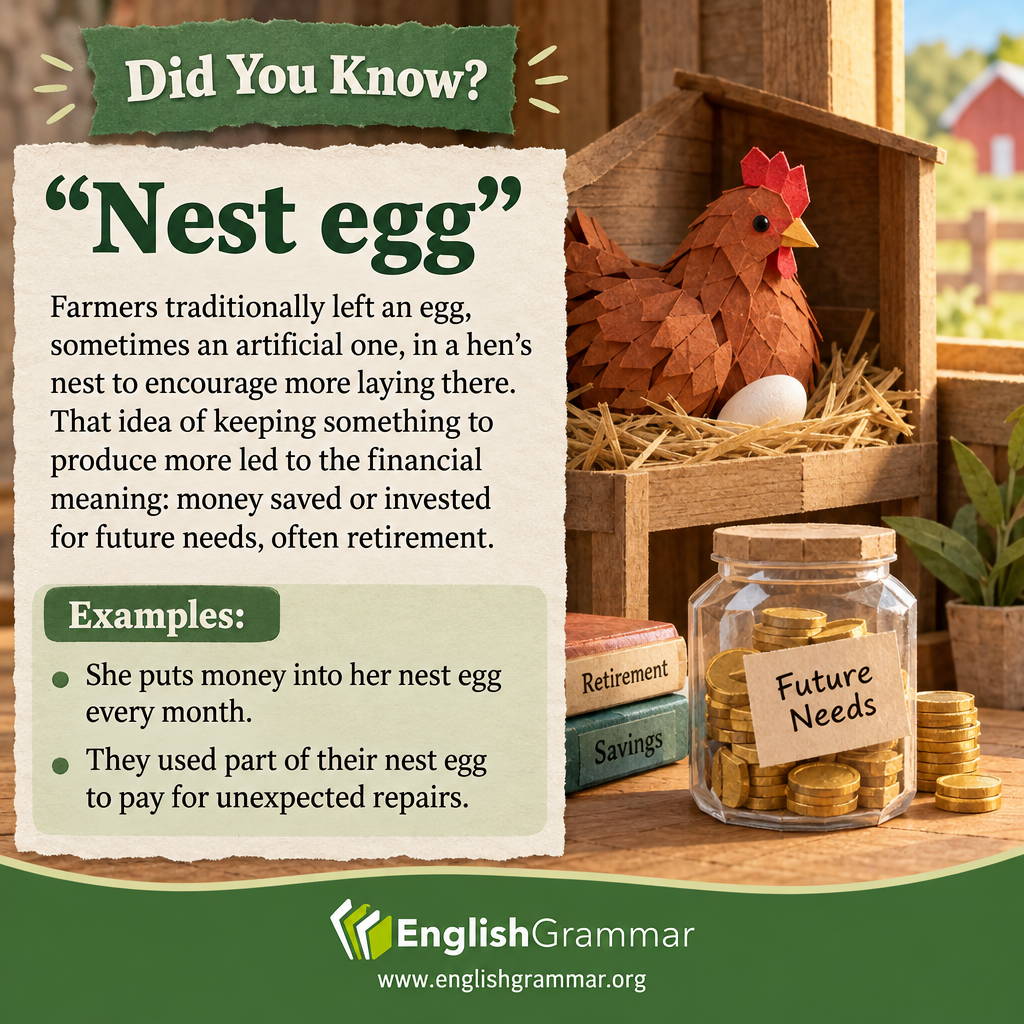
A nest egg is money saved or invested for the future. People often use the expression when talking about retirement, but it can also describe savings for emergencies or other future needs. It usually suggests money that someone keeps and builds up rather than spends on everyday purchases.
The expression comes from a traditional farming practice. Farmers would leave an egg, sometimes an artificial one, in a hen’s nest to encourage the hen to lay more eggs in that spot. This left-behind egg was called a nest egg.
The connection is easy to see: something kept in reserve could lead to more. In its financial meaning, the expression describes money put aside, often with the hope that it will grow through further saving or investment. It does not mean that growth is guaranteed.
Here are two examples of modern use:
- “They built a nest egg by saving part of their income every month.”
- “He hopes his nest egg will help cover his living costs after retirement.”
You may hear verbs such as build, grow, or protect with this expression. Each highlights a different action: accumulating savings, increasing their value, or keeping them safe. There is no fixed amount that qualifies; the expression focuses on the money’s role as a reserve for the future.
