
• Skip to primary navigation
  • Skip to main content
  • Skip to primary sidebar
Home of English Grammar
  • Home
  • Course
  • Exercises
  • Grammar Rules
  • Matches
  • Posts
  • Tools
    • Grammar Checker
    • Very Replacer
    • Word Counter
  • Vocabulary Lists
  • Archives
    • Social Media Posts
    • Writing Guides
  • Sign in
  • Join free

Why spoonerism is named after William Spooner

May 19, 2026

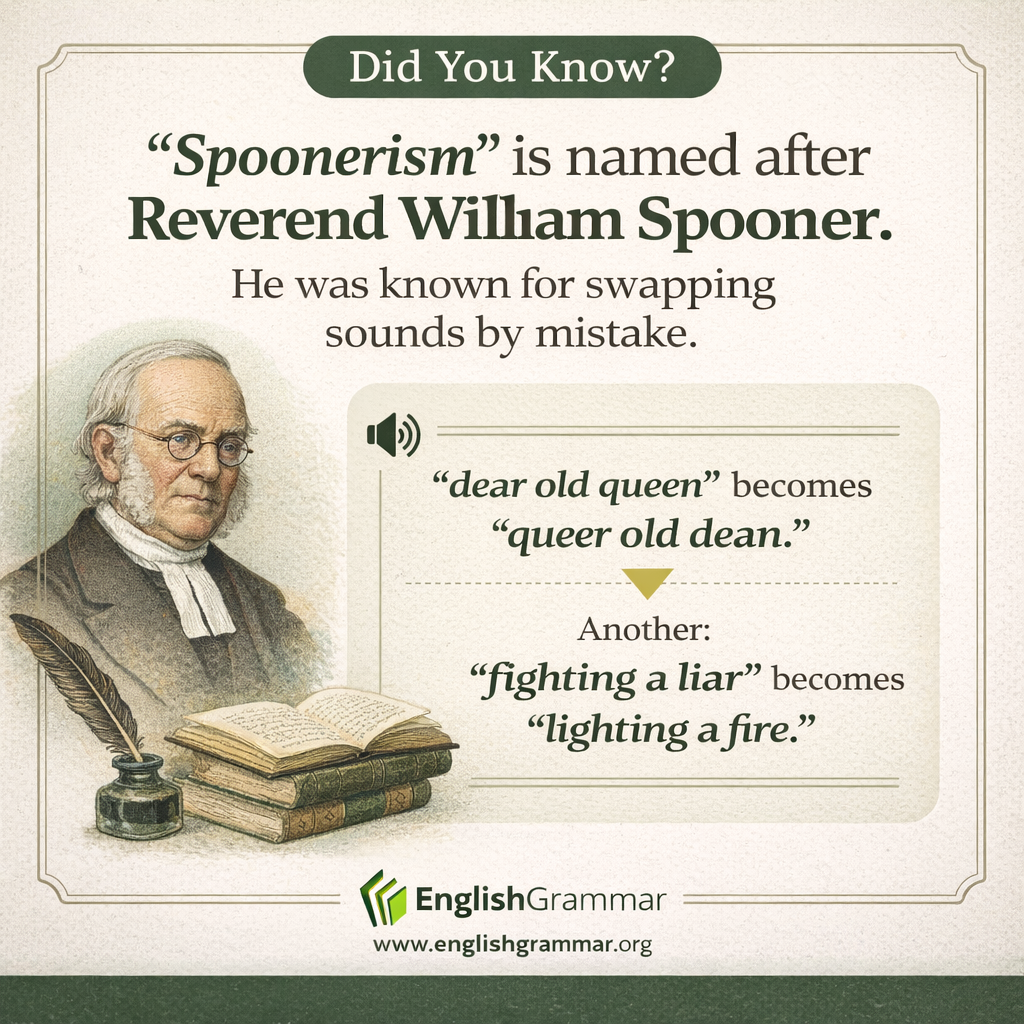
"Spoonerism" is named after a real person.

A spoonerism is a mix up in which the first sounds, or sometimes other parts, of two words are switched. The term is named after Reverend William Archibald Spooner, a British clergyman and teacher from the late 1800s and early 1900s.

Spooner had a reputation for making these slips while speaking. Whether he truly said every famous example is uncertain, but his name became attached to the pattern itself. That is why English uses spoonerism for this kind of mistake.

For example, dear old queen can become queer old dean. Another classic example is fighting a liar instead of lighting a fire. These are easy to notice because the words stay similar, but the meaning changes.

Spoonerisms are usually accidental, but writers and comedians also use them on purpose for wordplay.

  • Accidental: mixing sounds while speaking quickly
  • Deliberate: using sound swaps as a joke or style device

So the next time you hear a funny sound swap, you are hearing a term that came from a real person’s name.

Improve your English grammar, vocabulary and writing

We take you step by step from beginner to advanced, even if you struggled with English at school or have always had trouble remembering the rules.

  • 10 modules, 112 lessons and 730 questions
  • Just log in and learn anytime and anywhere
  • Your progress is saved in your account
  • Download the 2027 Grammar Guide (PDF)
Join free

Already have an account? Sign in

See what’s in the course

Primary Sidebar

2.4M760.9K165.9K

Free 2027 Grammar Guide

  • Download Grammar Guide (PDF)
  • Online grammar course, A1 to C2
  • Weekly exercises and vocabulary
  • Join over 3 million English learners

We respect your privacy. Unsubscribe anytime.

Already have an account? Sign in

Grammar Checker - Try Now

Latest Posts

  • 100 Best Synonyms for “Regard” November 2, 2026
  • 100 Best Synonyms for “Respite” November 2, 2026
  • 100 Proverbs from Around the World Every Adult Should Know November 2, 2026
  • 100 Best Synonyms for “Inappropriate” November 2, 2026
  • 100 Best Synonyms for “Unprecedented” November 2, 2026
  • Ample vs. plentiful vs. abundant vs. bountiful vs. copious vs. profuse November 2, 2026
  • 100 Best Synonyms for “Respectfully” November 2, 2026
  • Creepy, spooky, eerie, sinister, macabre, and bloodcurdling: What’s the difference? November 2, 2026
  • 100 Best Synonyms for “Improvement” November 2, 2026
  • 100 Best Synonyms for “Understood” November 2, 2026
Home of English Grammar

Free English grammar exercises, rules and vocabulary lists, with new exercises every week. Join the leading English grammar site with over 3 million followers.

Join free

Learn

  • Exercises
  • Matches
  • Grammar rules
  • Vocabulary lists
  • Writing guides
  • Online tools

More

  • Top social media posts
  • Various posts
  • Contact

Account

  • Join free
  • Grammar Course
  • Free grammar guide (PDF)

Copyright © 2026 EnglishGrammar.org

  • Disclaimer
  • Privacy policy
  • Terms
  • Sitemap